
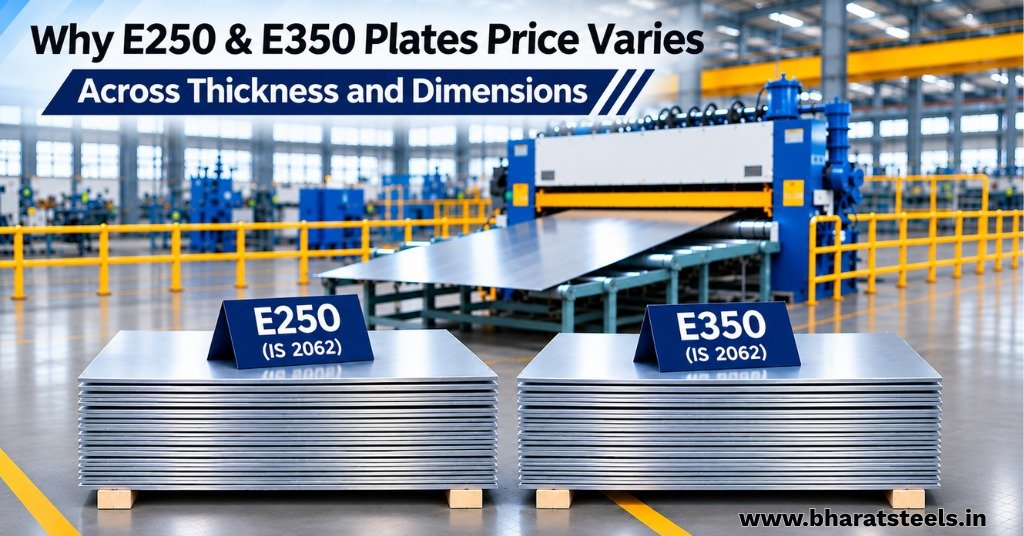
E250 & E350 plates price can vary significantly depending on the grade, thickness, length, width, weight, availability and processing requirements. Even when buyers source the same steel grade, differences in plate dimensions and specifications can result in different quotations. Understanding these factors helps procurement teams estimate material costs, compare supplier quotations and select suitable steel plates for their projects.
For industrial buyers, fabricators and construction companies, purchasing steel plates involves more than checking the price per tonne. The selected material grade must meet engineering requirements, while the plate dimensions should suit the intended application and fabrication process.
Bharat Steel Chennai supplies HR coils, HR sheets and structural steel products for industrial, construction and fabrication requirements. The company assists buyers in sourcing suitable steel materials based on project specifications, required dimensions and procurement needs.
1. Key Differences Between E250 & E350 plates Grades
E250 & E350 Plates Price are structural steel grades specified under IS 2062, with different mechanical property requirements. Their classification is based on specified strength characteristics, which help engineers identify the appropriate grade for different structural design requirements.
E250 Steel Plates: Grade Characteristics and Applications
E250 is used in general structural and fabrication applications where the specified strength requirements can be met by this grade. Depending on the engineering design, applications may include equipment supports, platforms, brackets, structural connections and fabricated assemblies.
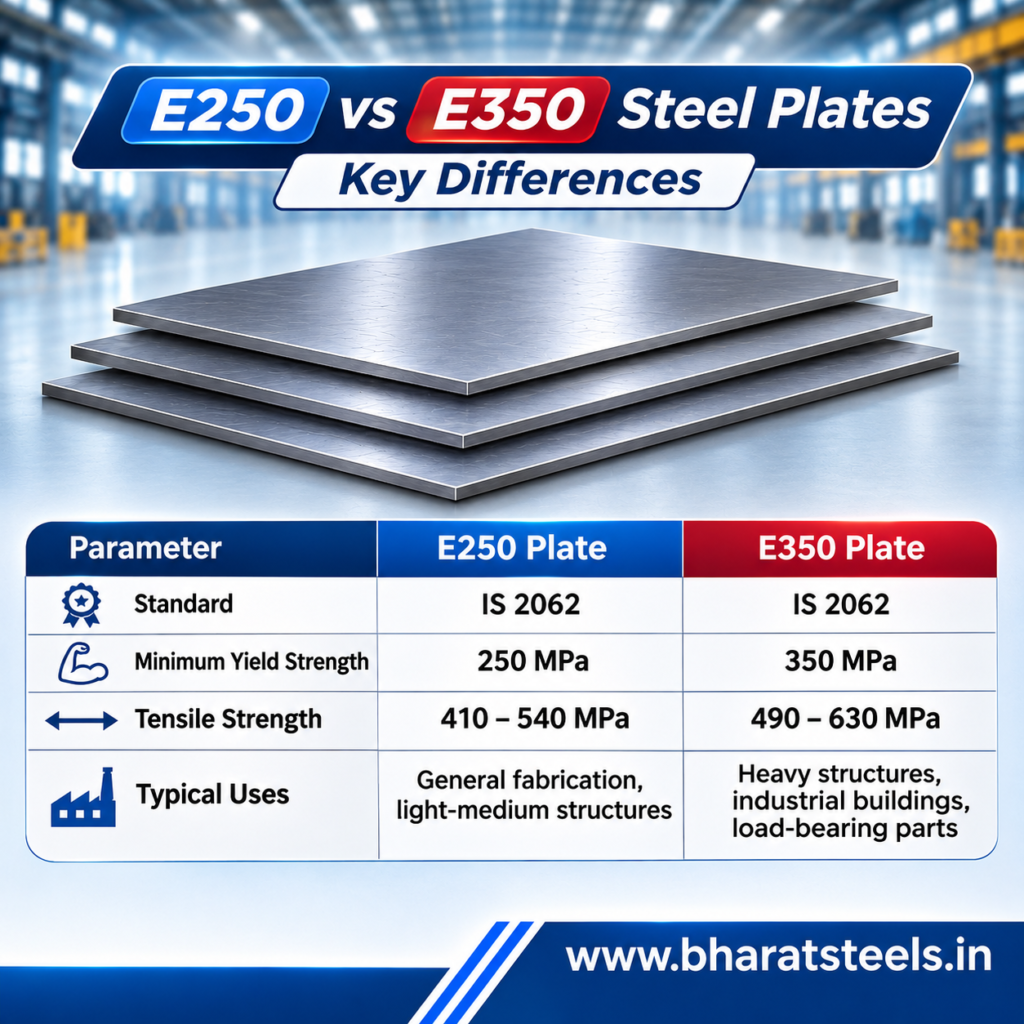
E350 Steel Plates: Strength and Applications
E350 offers higher minimum yield strength than E250, subject to the applicable thickness range and quality designation. It may be selected for structural applications where the design requires higher material strength.
The selection between these grades should be based on approved engineering drawings, loading conditions and technical specifications. Choosing a higher grade without a design requirement may increase procurement expenditure without providing a necessary benefit.
2. How Thickness Affects E250 & E350 Steel Plate Prices
Plate thickness plays an important role in determining E250 & E350 plates price. Plates with greater thickness require more steel, resulting in increased material weight and a higher purchase value.
When comparing plates with the same length and width, the quantity of steel used changes according to the selected thickness. This directly influences the theoretical weight and overall procurement cost.
For fabrication companies and industrial buyers, selecting the appropriate thickness based on engineering drawings and structural requirements is essential. Checking material availability and processing needs before placing an order can help avoid procurement delays and unnecessary expenses.
Coordinating with engineering and procurement teams also helps ensure that the selected plate specifications meet project requirements while supporting efficient material planning.
3. How Plate Dimensions Affect E250 & E350 Steel Plate Prices
The length and width of a steel plate directly influence E250 & E350 plates price by determining the overall surface area and quantity of material required. When the thickness remains the same, larger plate dimensions result in higher material weight and purchase value.
Plate dimensions also play an important role in fabrication planning. Selecting suitable sizes based on project drawings can help fabricators utilise the available material more efficiently and reduce unnecessary leftover material.
Before finalising plate dimensions, procurement and fabrication teams should consider:
- Component requirements specified in approved engineering drawings.
- Material utilisation during fabrication.
- Cutting allowances and potential material wastage.
- Availability of suitable commercial plate sizes.
Choosing appropriate plate dimensions based on fabrication requirements can improve material utilisation, minimise avoidable wastage and help businesses manage overall procurement costs.
4. How Grade Selection Influences E250 & E350 Plates Prices
Grade selection is another important factor affecting E250 & E350 plates price. The specified mechanical properties, manufacturing requirements and applicable quality designation can influence the commercial quotation.
However, the price difference between the two grades is not necessarily a fixed percentage. It can vary according to the thickness, material source, availability and prevailing steel market conditions.
The following factors may influence the quotation:
Manufacturing Source: Different manufacturing sources may have different commercial pricing and supply arrangements.
Material Specifications: The required grade, quality designation and applicable testing requirements can influence the purchase value.
Market Conditions: Changes in raw material costs, mill pricing, demand and supply conditions can influence steel plate prices.
For procurement managers, comparing quotations with identical material specifications is important. A higher-grade plate should not automatically be selected unless the engineering design requires it.
5. Other Factors That Influence Steel Plate Quotations
These purchasing factors can also influence the final E250 & E350 plates price quoted by suppliers. Apart from material specifications, several purchasing and supply-related factors can influence E250 & E350 plates price. These factors are important for buyers when planning orders, evaluating supplier offers and arranging material delivery.
Order Quantity
The total quantity required for a project can influence the commercial terms offered by suppliers. Bulk purchases and smaller orders may have different pricing arrangements depending on procurement requirements and supply conditions.
Material Availability
The availability of required steel plates across supplier distribution networks can affect order fulfilment and delivery schedules. Buyers should confirm stock availability before finalising their purchase to avoid unexpected delays.
Cutting and Processing Requirements
Steel plates may be required in standard supply sizes or prepared according to specific fabrication drawings. Additional processing charges can depend on the cutting method, work complexity and quantity involved.
Transportation and Delivery
Freight charges contribute to the overall delivered cost of steel plates. Delivery distance, vehicle arrangements, loading facilities and unloading requirements may influence transportation expenses.
Inspection and Documentation
Material Test Certificates (MTCs), inspection reports and other agreed quality documents are important during material procurement. Buyers should confirm the required documentation before placing an order to ensure that the supplied materials meet project acceptance requirements.
Considering these purchasing and supply factors helps buyers evaluate quotations more effectively and plan steel procurement according to project requirements.
6. How to Compare E250 & E350 Steel Plate Prices
When comparing E250 & E350 plates price, buyers should look beyond the basic price per tonne. All suppliers should quote based on the same material grade, dimensions, quality specifications and commercial conditions.
Before comparing offers, verify the following:
- Grade: E250 or E350 as specified in the approved drawing.
- Quality designation: Applicable quality requirement.
- Thickness: Exact nominal thickness required.
- Dimensions: Length and width of each plate.
- Quantity: Number of plates or total required weight.
- Inspection documents: Material Test Certificates (MTCs) and other required inspection reports.
- Processing: Whether cutting or additional services are included.
- Delivery: Freight, unloading and delivery location.
- Commercial terms: Applicable taxes, payment conditions and quotation validity.
A structured comparison makes it easier to identify differences between supplier offers and understand the actual delivered cost.
7. Choosing the Right Steel Plate for Industrial and Fabrication Projects
Choosing the right material is important when evaluating E250 & E350 plates price for industrial and fabrication projects. Buyers should consider project requirements, fabrication methods and expected service conditions before selecting a suitable steel grade. Considering these aspects helps buyers make informed decisions when comparing E250 & E350 plates price.
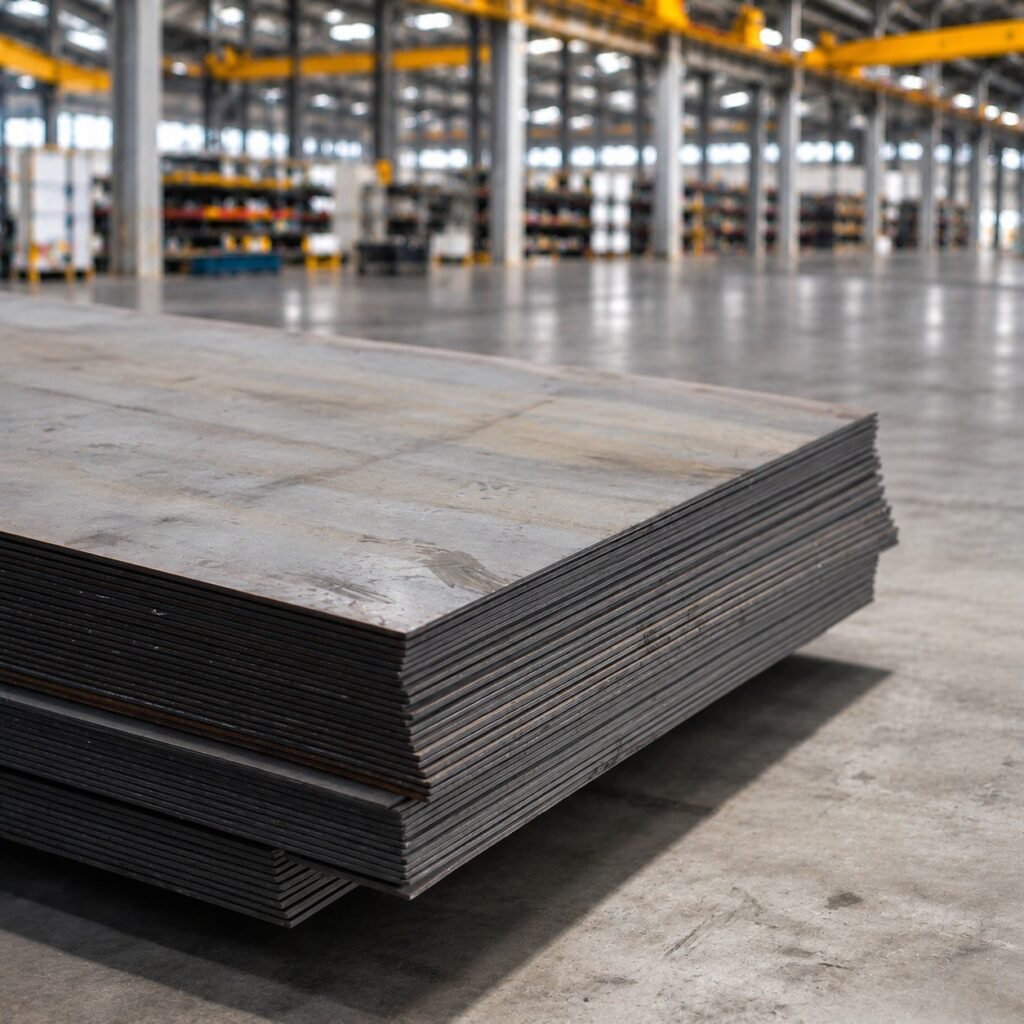
Steel plates are used in various industrial applications, including equipment supports, platforms, structural connections and fabricated components. The required grade and material specifications should be determined based on design calculations, loading conditions and the intended use of each component.
For industrial building requirements, Metfraa Steel Buildings provides Pre-Engineered Building solutions for industrial and commercial facilities, including structural fabrication and erection services.
8. Role of Steel Plates and Roofing Materials in Industrial Construction Projects
Industrial construction projects require careful planning of structural steel and roofing materials to meet building design and project requirements. Selecting suitable steel plates for structural applications and coordinating roofing materials with the building design helps maintain consistency throughout the construction process. Accurate material planning also helps businesses manage steel procurement costs alongside their overall construction budget.
Industrial buildings require suitable structural steel components and roofing materials to meet their design and functional requirements. Steel plates contribute to structural fabrication, while roofing sheets provide weather protection and suitable building coverage.
Crayon Roofings supplies metal roofing sheets for industrial and commercial buildings, offering roofing solutions for projects with different building requirements. Coordinating roofing sheet selection with structural steel and purlin requirements can help project teams plan material procurement and site activities more effectively.
Conclusion
E250 & E350 plates price vary because of several interconnected factors, including material grade, thickness, length, width, theoretical weight, availability and processing requirements. Understanding these factors helps buyers evaluate quotations, estimate material costs and select plates that meet their project specifications.
For procurement managers, fabricators and industrial buyers, understanding E250 & E350 plates price makes it easier to evaluate quotations, estimate material costs and select plates that meet project specifications.
At Bharat Steel Chennai, we support industrial, construction and fabrication requirements through our range of HR coils, HR sheets and structural steel products. For product details, material specifications or purchase enquiries, contact us to discuss your requirements and receive further assistance.
Frequently Asked Questions
1. How can I get the latest E250 & E350 steel plate prices in Chennai?
Bharat Steel Chennai Pvt. Ltd., an authorised SAIL distributor in Chennai, is a preferred choice for sourcing genuine SAIL E250 & E350 HR sheets and steel plates. Prices vary depending on grade, thickness, dimensions, quantity and prevailing market conditions. Customers can contact Bharat Steel Chennai directly to get the latest prices, check material availability and request a competitive quotation based on their requirements.
2. What is the difference between E250 & E350 steel plates?
E250 & E350 Plates price are structural steel grades with different strength requirements. E350 generally offers higher minimum yield strength than E250, depending on the applicable thickness range and quality designation.
3. Why does E250 plate pricing change with thickness?
Thicker steel plates contain more material by weight for the same length and width. This increases the total material quantity and directly affects the purchase cost.
4. How Do Plate Dimensions Affect E250 & E350 Steel Plate Prices?
The length and width of a steel plate determine its overall surface area. Larger dimensions require more material at the same thickness, resulting in higher theoretical weight and total purchase cost.
5. What details are required to request a steel plate quotation?
Provide the required grade, quality designation, thickness, length, width and order quantity. Inspection requirements, delivery location and approved engineering drawings can help suppliers prepare an accurate quotation.
