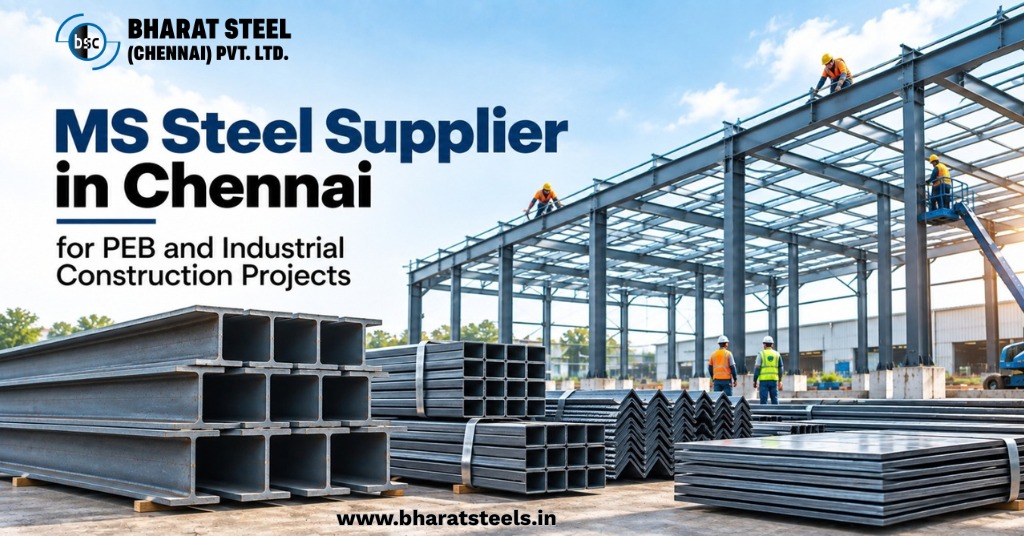
MS steel Supplier in Chennai plays an important role in keeping PEB and industrial construction projects moving from design to fabrication and, finally, to site execution. For a large industrial project, steel is not simply another material to be purchased. The right grade, section, thickness, quantity and delivery schedule can directly influence fabrication planning and project timelines.
PEB manufacturers, structural fabricators, EPC contractors and industrial builders often handle multiple steel requirements at the same time. Beams, channels, angles, MS plates, HR plates and other structural products may need to be procured in substantial quantities and delivered according to production schedules.
This makes supplier selection an important part of project planning. A dependable steel partner should be capable of supporting not only material supply but also quality documentation, bulk requirements, processing and timely dispatch.
Why Steel Procurement Matters in PEB Projects
Pre-engineered buildings are designed around a planned sequence of engineering, manufacturing and erection. Once the structural design is finalised, the availability of the required steel becomes critical for fabrication.
A delay in procurement can create a chain reaction:
Steel delay → Fabrication delay → Dispatch delay → Erection delay → Project schedule impact
This is why PEB companies need to evaluate their steel sourcing strategy before placing major orders.
An experienced MS steel Supplier in Chennai can support this process by coordinating material availability, required steel sections and delivery schedules with the project’s planned production requirements.
Common MS Steel Requirements for Industrial Construction
Industrial projects rarely depend on a single type of steel product. The exact requirement depends on the structural design, application and engineering specifications.
Some commonly required products include:
MS Beams
MS beams are widely used in structural and industrial applications where load-bearing sections are required. They can form part of building frames, platforms, mezzanines and other structural assemblies.
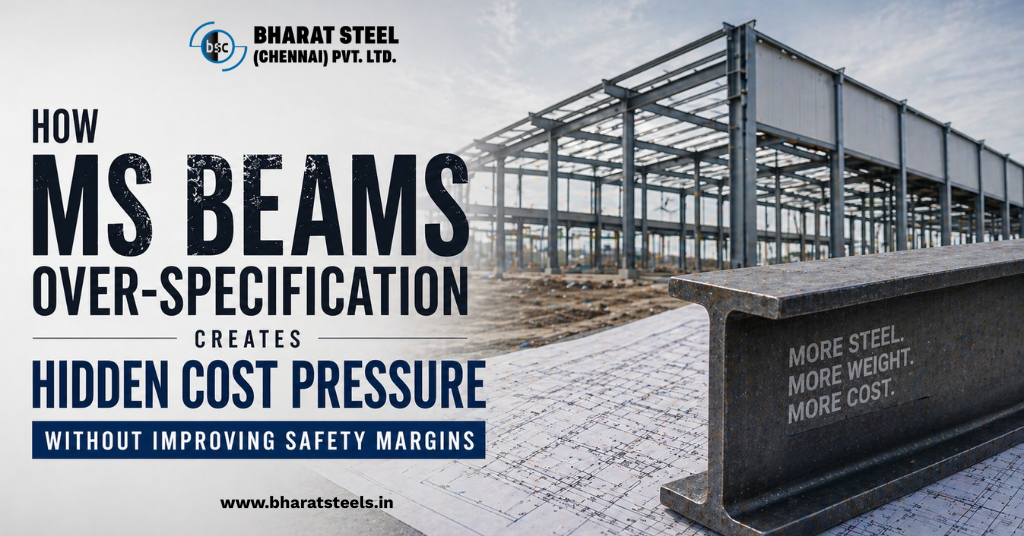
The appropriate beam section should always be determined based on the approved structural design rather than simply selecting a larger or heavier section.
MS Channels
Channels are commonly used in structural fabrication, support frames, platforms, equipment supports and secondary structural applications.
Their availability in different sizes allows fabricators to select sections according to specific project requirements.
MS Angles
MS angles are frequently used for bracing, supports, frames and fabrication work. They can also form part of secondary structural assemblies where an angle section is appropriate for the design.
MS Plates
MS plates have applications across industrial fabrication and structural construction. They can be used for base plates, gusset plates, connection components, supports and built-up structural members.
For fabrication-intensive projects, plate thickness, grade and dimensional accuracy need to be carefully verified before procurement.
For projects involving multiple structural sections, an MS steel Supplier in Chennai can help procurement teams coordinate beams, channels, angles and plates based on the project’s quantity and specification requirements. This can simplify purchasing when different steel products are required for the same construction schedule.
HR Plates and Sheets
Hot-rolled plates and sheets are used across fabrication, engineering and industrial applications. They are particularly relevant when projects involve heavier fabrication or components requiring specified thicknesses.
What Makes a Good Steel Supplier for PEB Projects?
The lowest quotation does not necessarily represent the best procurement option.
For a PEB project, procurement teams should consider the supplier’s overall ability to deliver the required material accurately and on schedule, supporting PEB execution without unnecessary delays.
1. Product Availability
A project may require several steel sections, grades and thicknesses simultaneously. Suppliers with a strong product range and stock position can make procurement more convenient.
Instead of sourcing every product from a different vendor, buyers may be able to consolidate a significant portion of their requirement through one supply partner.
2. Grade and Specification Accuracy
Steel should be purchased according to the project’s approved drawings and technical specifications.
Before ordering, procurement teams should verify:
- Steel grade
- Section size
- Plate thickness
- Length
- Quantity
- Applicable standards
- Project-specific requirements
An MS steel Supplier in Chennai serving industrial customers should be able to clearly communicate the specifications of the material being supplied, including HR Sheets where applicable.
3. Quality Documentation
Documentation is an important consideration for organised industrial projects.
Depending on the customer’s requirements, material may need supporting documentation such as:
- Mill Test Certificates
- Heat numbers
- Grade details
- Mechanical properties
- Weight information
- Dispatch records
Maintaining proper documentation can make material verification and traceability easier for procurement and quality teams.
How Cut-to-Length Steel Can Support Fabrication
One of the challenges faced by fabrication units is the amount of preparation required before steel can enter production.
When standard-size plates or coils need to be cut into multiple project-specific dimensions, the fabrication team must allocate manpower, equipment and production time for the operation.
Cut-to-length supply can reduce some of this preparation.
For suitable requirements, steel can be processed according to predetermined dimensions before reaching the fabrication stage. This can help reduce handling and allow production teams to concentrate on subsequent fabrication activities.
For fabrication units handling repetitive dimensions, an MS steel Supplier in Chennai offering cut-to-length solutions can help convert standard steel into project-specific sizes before fabrication begins. This can reduce unnecessary cutting work at the fabrication facility and make material handling more organised.
For projects with large quantities of plates or repetitive dimensions, this can become particularly useful.
A capable MS steel Supplier in Chennai with appropriate processing facilities can therefore contribute to a more streamlined material flow.
The Importance of Bulk Steel Supply
Industrial construction projects can involve significant quantities of steel. Procurement teams must therefore look beyond the supplier’s ability to fulfil a small order.
Bulk procurement requires coordination of:
- Material quantities
- Available stock
- Incoming supplies
- Processing requirements
- Dispatch schedules
- Transportation
- Project priorities
The ability to manage these elements becomes increasingly important as project size increases.
For PEB manufacturers handling multiple projects, dependable bulk supply of roofing materials and accessories can also make material planning easier and reduce the risk of unexpected shortages during fabrication and installation.
Why Delivery Planning Should Be Part of Procurement
Buying steel is only one part of the procurement process. Getting the material to the right location at the right time is equally important.
For example, if steel arrives significantly earlier than required, it can increase storage and handling requirements. If it arrives late, fabrication may have to wait.
Therefore, delivery planning should consider the project’s actual consumption schedule.
A practical approach is to divide procurement into planned batches wherever appropriate rather than treating the entire steel requirement as one delivery.
An MS steel Supplier in Chennai with experience in industrial requirements can work with customers to coordinate dispatches according to their material schedule.
Don’t Compare Steel Suppliers Only on Price Per Kilogram
Price is naturally an important part of any steel purchase. However, focusing only on ₹/kg can sometimes hide the actual cost of procurement.
The final cost can also be influenced by:
- Transportation
- Cutting and processing
- Material wastage
- Handling
- Storage
- Delivery delays
- Additional fabrication
- Rework
- Documentation requirements
For example, a slightly cheaper material may not provide a genuine saving if it requires additional processing at the fabrication facility or causes a production delay.
A better comparison is based on total procurement value, not just the initial material quotation.
How Local Steel Supply Can Help Chennai-Based Projects
For industrial projects located in and around Chennai, choosing an MS steel Supplier in Chennai can simplify coordination between procurement, fabrication and transportation.
Chennai’s industrial ecosystem includes manufacturing facilities, warehouses, engineering units, infrastructure projects and fabrication businesses. Many of these operations require steel to be available according to tightly planned schedules.
Local supply can offer practical advantages such as easier communication, faster coordination and more convenient delivery planning.
However, geographical proximity alone should not be the deciding factor. Stock strength, product range, quality systems and processing capabilities should also be evaluated.
Choosing the Right Supplier for Your Project
Before finalising an MS steel Supplier in Chennai, procurement teams can use a simple evaluation checklist.
Check the Product Range
Make sure the supplier can provide the sections, plates and other materials required for the project.
Verify Specifications
Confirm that the offered material matches the grade, dimensions and technical requirements mentioned in the approved documentation.
Ask About Stock
Find out which materials are readily available and which may require additional sourcing time.
Review Processing Capability
If your project requires cut-to-length plates or other material preparation, understand what processing services the supplier can provide.
Confirm Documentation
Check whether the supplier can provide the quality and traceability documents required for your project.
Discuss Delivery
Clarify expected lead times, dispatch arrangements and whether phased deliveries can be supported.
Bharat Steel Chennai for Industrial Steel Requirements
For companies looking for an MS steel Supplier in Chennai, Bharat Steel Chennai provides steel products for industrial, construction and fabrication requirements.
Its product portfolio includes HR coils and plates, structural steel, MS beams, channels, angles, chequered plates and other steel products used across industrial applications.
The company also supports customers requiring cut-to-length steel and fabrication-ready material, helping businesses reduce some of the additional preparation required before steel enters their production process.
For PEB manufacturers and industrial fabricators, having access to both steel products and processing support can simplify procurement and material planning.
Building a More Reliable Steel Procurement Process
A successful steel procurement process begins well before the purchase order is issued.
The project team should first establish the material requirement from approved drawings and engineering documents. The procurement team can then identify the required grades, sections, thicknesses and quantities.
Once these requirements are clear, suppliers can be evaluated based on:
Specification → Availability → Quality → Processing → Price → Delivery
This approach gives project teams a more complete view of the supplier’s capability.
It also reduces the possibility of making procurement decisions based purely on price.
For large projects, working with an MS steel Supplier in Chennai that understands industrial material requirements can make coordination between purchasing, production and project execution considerably easier. The supplier’s ability to manage product availability, specifications, processing and scheduled deliveries can help procurement teams maintain a more organised material flow.
Conclusion
Selecting the right MS steel suppliers in Chennai for PEB and industrial construction projects is ultimately a project execution decision, not just a purchasing decision.
The right supplier should be able to support material availability, grade accuracy, documentation, bulk supply, processing and delivery coordination.
For PEB manufacturers, EPC contractors, fabricators and industrial project teams, a dependable steel supply chain can help maintain fabrication continuity and keep construction schedules on track.
With its range of MS and structural steel products, processing capabilities and project-oriented supply support, Bharat Steel Chennai can serve as a single-source steel partner for industrial and PEB requirements.
Frequently Asked Questions
- What should I look for in MS steel suppliers in Chennai?
Look for product availability, correct grades and dimensions, quality documentation, bulk supply capability, processing facilities and reliable delivery support.
- Which MS steel products are commonly used in PEB projects?
Common requirements include MS plates, beams, channels, angles and other structural steel sections, depending on the project’s engineering design.
- Is the lowest steel price always the best option?
Not necessarily. Total procurement cost also depends on processing, transportation, wastage, delivery reliability and other project-related factors.
- Can Bharat Steel Chennai supply steel for PEB projects?
Yes. Bharat Steel Chennai supplies structural and MS steel products and provides processing and project-oriented supply support for industrial and PEB requirements