Skip to content

Bharat Steels

Blog

  • Home
  • About Us
  • Long Products
    • TMT Rebars
    • M.S.Angles
    • M.S.Channels
    • M.S.Beams
    • M.S.Rounds
  • Flat Products
    • H.R.Sheets
    • M.S.Plates
    • MS Flates / GI Flates
    • Chequered Plates
  • Weight Calculator
  • Roofing
  • PEB
  • Blog
  • Contact
  • Download
Bharat Steels

Tag: Base plates

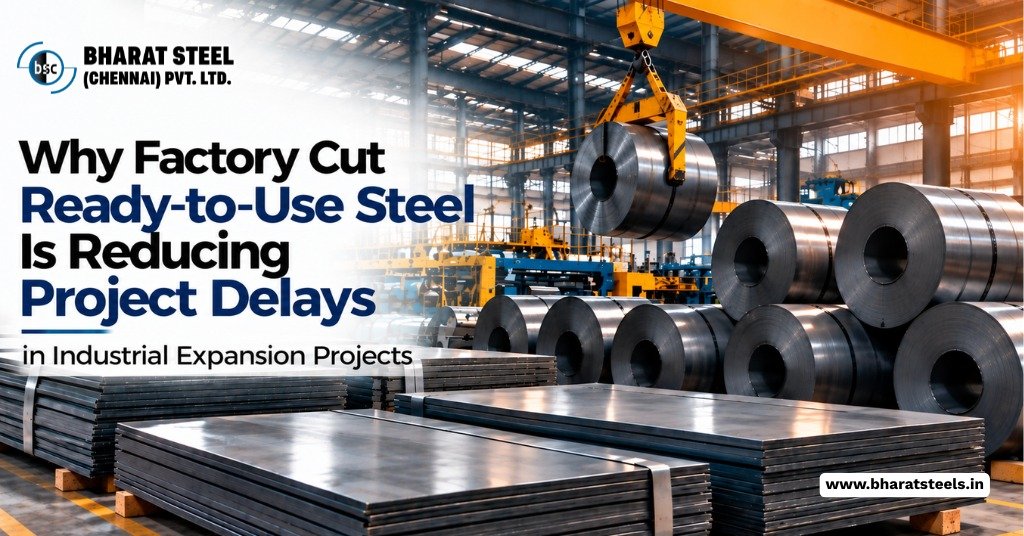
Why Factory Cut Ready to Use Steel Is Reducing Project Delays in Industrial Expansion Projects 

November 5, 2026
Ready-to-Use Steel is Reducing Projects delays

Ready-to-Use Steel plays an important role in industrial construction and fabrication projects by helping businesses procure steel components according to their specific project requirements. In industrial buildings, warehouses and manufacturing facilities, individual components must have suitable dimensions and preparation to meet fabrication and installation requirements.

Ready-to-Use Steel allows businesses to procure selected steel components in dimensions suited to their project requirements. Components such as base plates, webs and flanges can be prepared according to approved project drawings and intended applications. This helps fabrication teams organise their material requirements and plan subsequent operations more effectively. The preparation involved depends on the component design, approved drawings and agreed processing requirements. 

For businesses handling industrial construction and fabrication projects, choosing the right steel materials and supply arrangement is an important part of procurement planning. Bharat Steel Chennai supplies a range of HR coils and structural steel sections for industrial and construction requirements. With a clear understanding of material specifications and project needs, buyers can make informed decisions about selecting suitable steel products for their applications. 

1. Understanding Ready-to-Use Steel Components 

Ready-to-Use Steel refers to steel components supplied with specified dimensions and agreed preparation based on project requirements. Instead of receiving only standard stock lengths or larger plates that need further sizing, buyers can specify the required measurements using their project drawings and component schedules. 
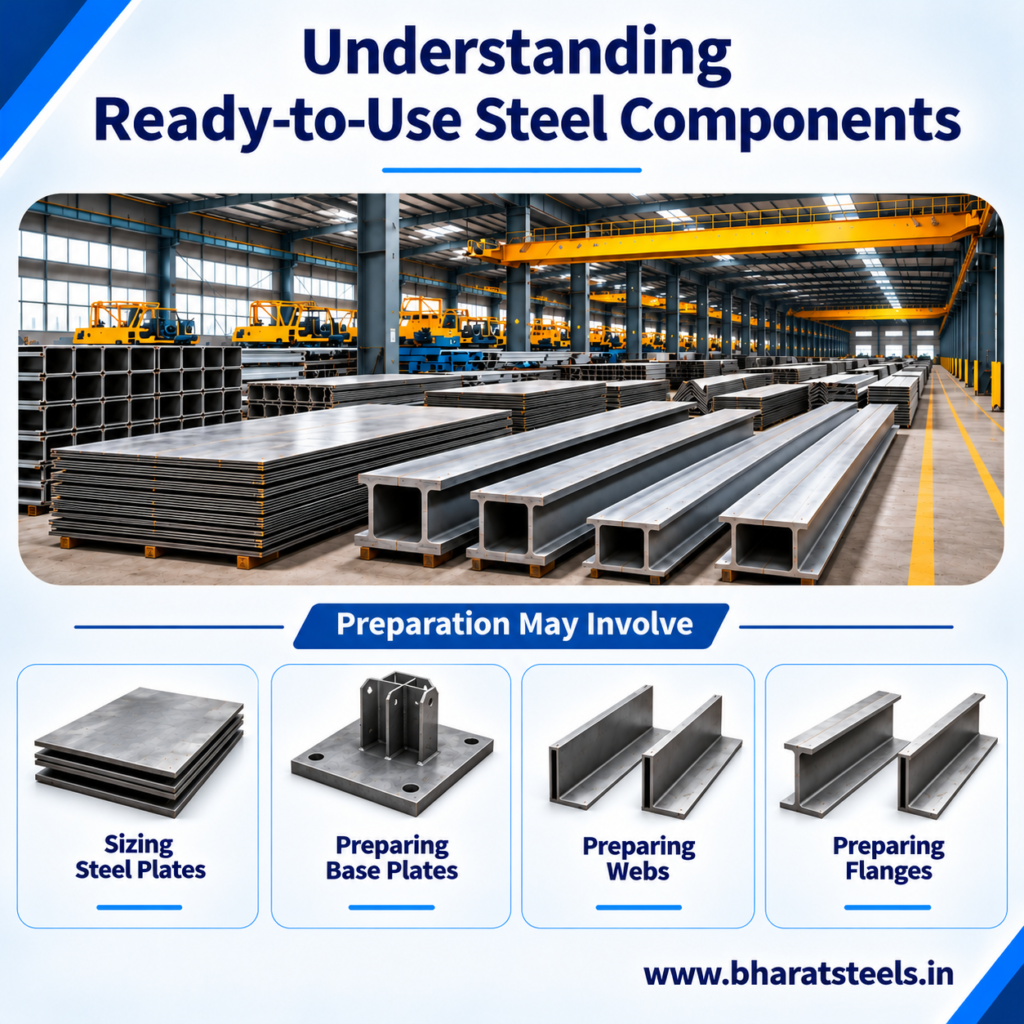
Ready-to-Use Steel Components

Depending on the agreed scope of supply, preparation may involve: 

  • Preparing base plates according to specified dimensions. 
  • Cutting webs to the required lengths and dimensions. 
  • Preparing flanges based on approved engineering drawings. 
  • Maintaining dimensional accuracy according to component specifications. 
  • Preparing individual components for subsequent fabrication activities. 

The exact preparation depends on the material specifications, equipment capability, component design and agreed processing requirements. 

It is important to understand that dimension-specific components are not necessarily completed fabricated assemblies. Welding, machining, drilling, surface treatment, coating and final assembly may still be required depending on the application. 

2. How Pre-Prepared Steel Components Help Reduce Project Delays 

Ready-to-Use Steel components such as base plates, webs and flanges can help streamline material preparation for industrial fabrication applications.

Industrial construction projects involve several connected activities, including material procurement, preparation, fabrication, quality inspection, transportation and installation. Delays in one activity can affect the progress of subsequent operations. 

Supplying selected components in predetermined dimensions can help streamline some of these activities. 

Reduced On-Site Preparation Work 

Ready-to-Use Steel helps reduce some of the initial material preparation activities at the fabrication unit when components arrive according to the agreed dimensions.

When materials arrive in standard stock dimensions, the receiving team may need to arrange additional sizing before they can move to the next stage. This requires suitable equipment, operators, working space and additional material handling. 

Components prepared to the required dimensions before dispatch can reduce preliminary sizing work after delivery. This allows fabrication teams to focus on subsequent operations instead of spending additional time on initial material preparation. 

Better Coordination Between Procurement and Fabrication 

Planning Ready-to-Use Steel requirements in advance allows procurement teams to coordinate component dimensions, quantities and delivery schedules with fabrication teams.

A project may require different components in specific dimensions and quantities. When these requirements are identified in advance and shared through approved drawings or component schedules, procurement teams can coordinate the supply more effectively. 

This helps fabrication teams understand which materials are expected, how they relate to individual work packages and when they are required for production. 

Less Material Rehandling 

Repeated movement of steel between storage areas, processing equipment and fabrication workstations can consume time and create additional handling requirements. 

Supplying prepared components can reduce some of these movements, particularly when materials are identified and organised according to their intended applications. This can make material issue and movement within the fabrication unit more systematic. 

Improved Fabrication Scheduling 

When components are supplied according to an agreed preparation schedule, fabrication teams can plan subsequent activities more clearly. They can organise welding, machining, drilling or assembly operations based on the components received and their production priorities. 

This is particularly useful when multiple structures or fabrication packages are being handled simultaneously. 

Reduced Risk of Dimensional Rework 

Preparing materials without referring to the latest approved drawings or component schedules can result in dimensional errors. Correcting such errors may require additional processing or replacement material. 

Advance preparation based on approved dimensions and revision-controlled drawings can help reduce this risk. However, accuracy still depends on correct inputs, suitable processing methods and quality checks. 

3. Steel Components Commonly Used in Industrial Projects 

Ready-to-Use Steel components such as base plates, webs and flanges are used in different industrial fabrication applications.

Industrial fabrication projects require different steel components based on structural design, loading conditions and engineering requirements. 

The commonly prepared components include: 

  • Base Plates: Used at structural column connections to transfer loads to supporting foundations. Their dimensions and thickness are determined by engineering drawings. 
  • Webs: Form the vertical portion of built-up structural members and contribute to their structural strength. Their dimensions depend on the design requirements. 
  • Flanges: Form the horizontal portions of built-up structural members and help resist bending forces. Their dimensions are specified through approved engineering drawings. 

The dimensions, thickness and specifications of these components should be established through approved engineering requirements before processing begins. 

4. Why Accurate Drawings and Specifications Matter 

The successful supply of Ready-to-Use Steel depends on the accuracy of the information shared with the supplier. Incomplete or outdated drawings can lead to incorrect dimensions, unnecessary material wastage and processing delays.

Before placing an order, buyers should provide: 

  • Material specification: Required steel grade and applicable material standard. 
  • Dimensions: Length, width, thickness and other relevant measurements. 
  • Quantity: Number of pieces required for each component. 
  • Processing details: Required preparation details, including dimensions and any agreed additional processing operations. 
  • Drawing references: Approved drawings, component schedules and revision numbers. 
  • Delivery schedule: Required delivery dates, locations and work-package priorities. 

Any changes to the approved drawings should be communicated before processing starts. This helps prevent work from proceeding based on outdated project information. 

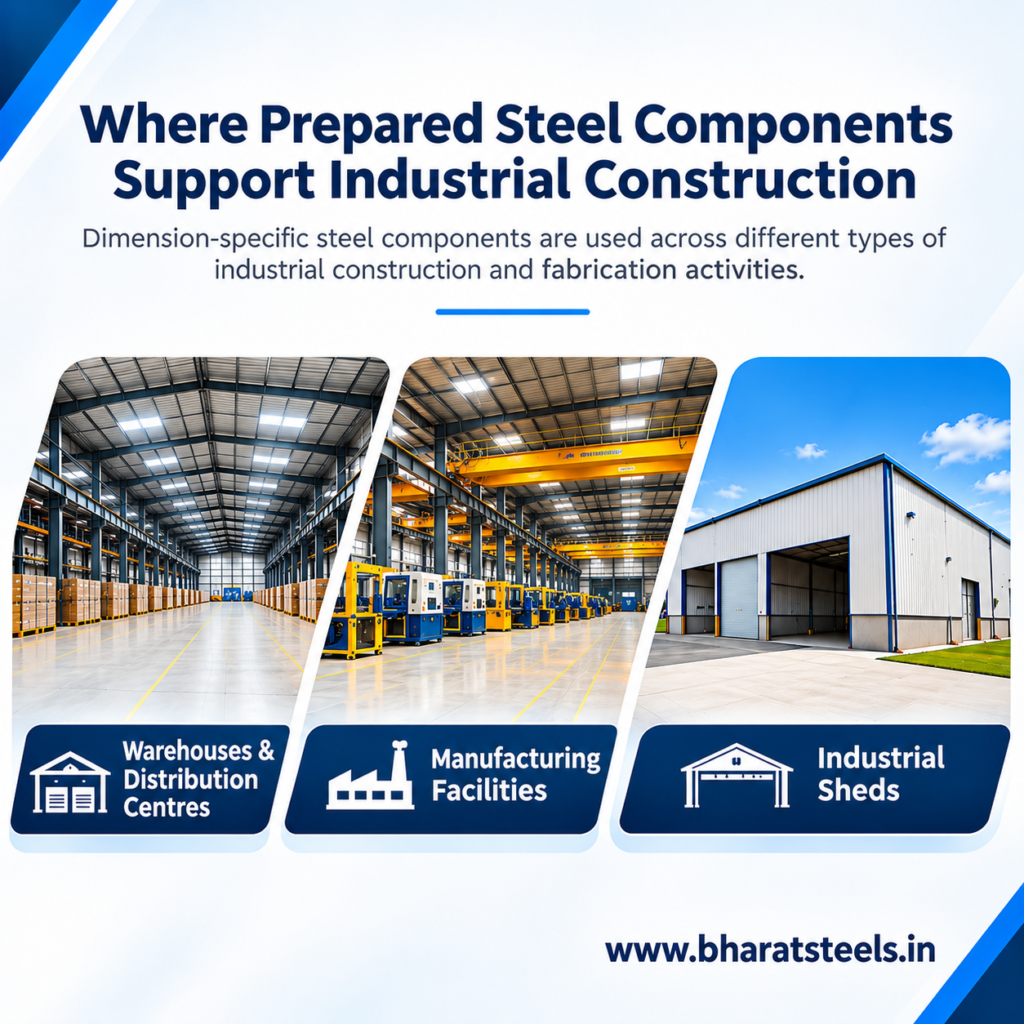
5. Where Prepared Steel Components Support Industrial Construction 

Ready-to-Use Steel components can support different types of industrial construction and fabrication activities. Their application depends on structural design, loading conditions and engineering requirements.

Warehouses and Distribution Centres 

Industrial warehouse projects may require base plates, webs and flanges for structural fabrication. Preparing these components according to approved dimensions helps fabrication teams organise individual structural elements and coordinate subsequent construction activities. 
Where Prepared Steel Components Support Industrial Construction 

Manufacturing Facilities 

Manufacturing buildings may require built-up structural members and equipment support arrangements. Base plates, webs and flanges can be prepared according to engineering drawings to meet the dimensional requirements of different structural applications. 

Industrial Sheds 

Industrial sheds require properly coordinated structural components for fabrication and erection. Accurate preparation of base plates, webs and flanges helps fabrication teams manage material requirements and maintain better coordination during construction. 

For larger industrial building requirements, a Pre-Engineered Building system can integrate structural design, fabrication and erection. Metfraa Steel Buildings provides PEB solutions for industrial building projects. 

6. How Material Preparation Supports Faster Industrial Project Execution

Industrial construction projects require proper coordination between material procurement, fabrication and installation activities. Base plates, webs and flanges must be prepared according to approved project specifications, while their supply needs to align with the construction schedule. 

Accurate component dimensions, planned quantities and timely delivery help fabrication teams organise their work and coordinate subsequent activities more efficiently. Along with structural components, roofing products such as metal sheets, purlins and installation accessories should also be planned according to the building requirements. 

For industrial roofing requirements, Crayon Roofings supplies metal roofing sheets. Coordinating roofing material selection and delivery with the structural work can help project teams manage different construction activities more effectively. 

7. Quality Checks Before Fabrication and Installation 

Advance preparation does not remove the need for material inspection. Each supplied component should be checked against the purchase order, approved drawings and applicable material specifications. 

The receiving or quality team should verify: 

  • Material grade and applicable specification. 
  • Component length, width, thickness and dimensional tolerances, wherever specified 
  • Quantity against the purchase order. 
  • Identification and traceability details. 
  • Material Test Certificates (MTCs) and other inspection documents, where required. 

Prepared components should also be checked against the relevant component schedule or drawing revision. Any dimensional or material discrepancy should be reviewed before the item moves into fabrication or installation. 

8. Managing Material Supply for Better Project Coordination 

Large industrial projects may involve several buildings, structures or fabrication packages, each with different material requirements and delivery priorities. 

For Ready-to-Use Steel requirements, a planned material schedule helps procurement teams organise component specifications, quantities, preparation details and delivery priorities.

A planned material schedule helps procurement teams organise these requirements. It should include item descriptions, specifications, quantities, preparation details and expected delivery dates. 

Supplying components in planned batches can also help reduce unnecessary storage and make it easier for fabrication teams to identify materials for each work package. 

When project requirements change, revised quantities and drawings should be communicated to the supplier as early as possible. This is especially important when processing activities have already been scheduled or completed. 

Proper planning of Ready-to-Use Steel components helps maintain coordination between procurement, engineering, fabrication and site teams throughout the material supply process.

Clear coordination between procurement, engineering, fabrication and site teams helps maintain consistency throughout the material supply process. 

Conclusion  

Ready-to-Use Steel gives industrial buyers greater flexibility in specifying base plates, webs and flanges for different construction and fabrication applications.

Clear procurement information, appropriate quality checks and effective communication between suppliers and project teams help ensure that these components meet the requirements of their intended applications. 

Effective coordination between material suppliers, procurement teams and fabrication units also helps maintain a consistent workflow. When component requirements are clearly communicated in advance, project teams can plan their activities with better clarity and minimise avoidable interruptions.

At Bharat Steel Chennai, we support industrial and fabrication requirements through the preparation and supply of selected steel components based on project specifications. For product details, material specifications or project enquiries, Contact Us to discuss your requirements with our team. 

Frequently Asked Questions 

1.What steel components does Bharat Steel Chennai supply for industrial fabrication? 

Bharat Steel Chennai supplies a range of steel products, including HR coils, HR sheets, structural steel sections, TMT rebars and prepared steel components such as base plates, webs and flanges for industrial, construction and fabrication requirements. 

2. What factors determine the dimensions of steel components used in industrial construction? 

The dimensions depend on structural design, load requirements, application, approved engineering drawings and the specifications of the project. 

3.What information is required to specify steel components accurately? 

Material grade, thickness, dimensions, quantity, processing instructions and drawing references should be clearly mentioned in the purchase requirement. 

4. What is the difference between standard steel sections and prepared steel components? 

Standard steel materials are supplied in regular commercial sizes, whereas Ready-to-Use Steel components such as base plates, webs and flanges are prepared according to specific project dimensions and fabrication requirements.

5. How can buyers ensure the quality of steel materials before fabrication? 

Buyers should verify material grade, thickness, dimensions, quantity, identification markings and applicable Material Test Certificates (MTCs) against the purchase order and approved specifications.
Blog Base plates, Ready-to-Use Steel

The Function of Base Plates in Transferring Structural Loads from Steel Columns to Foundations 

October 31, 2026
The Function of Base Plates in Transferring Structural Loads from Steel Columns to Foundations

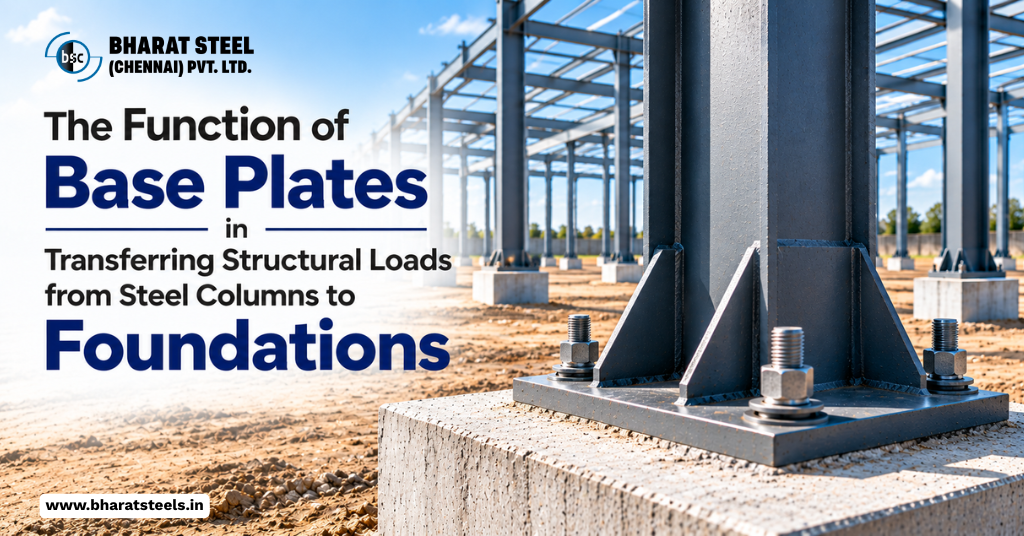
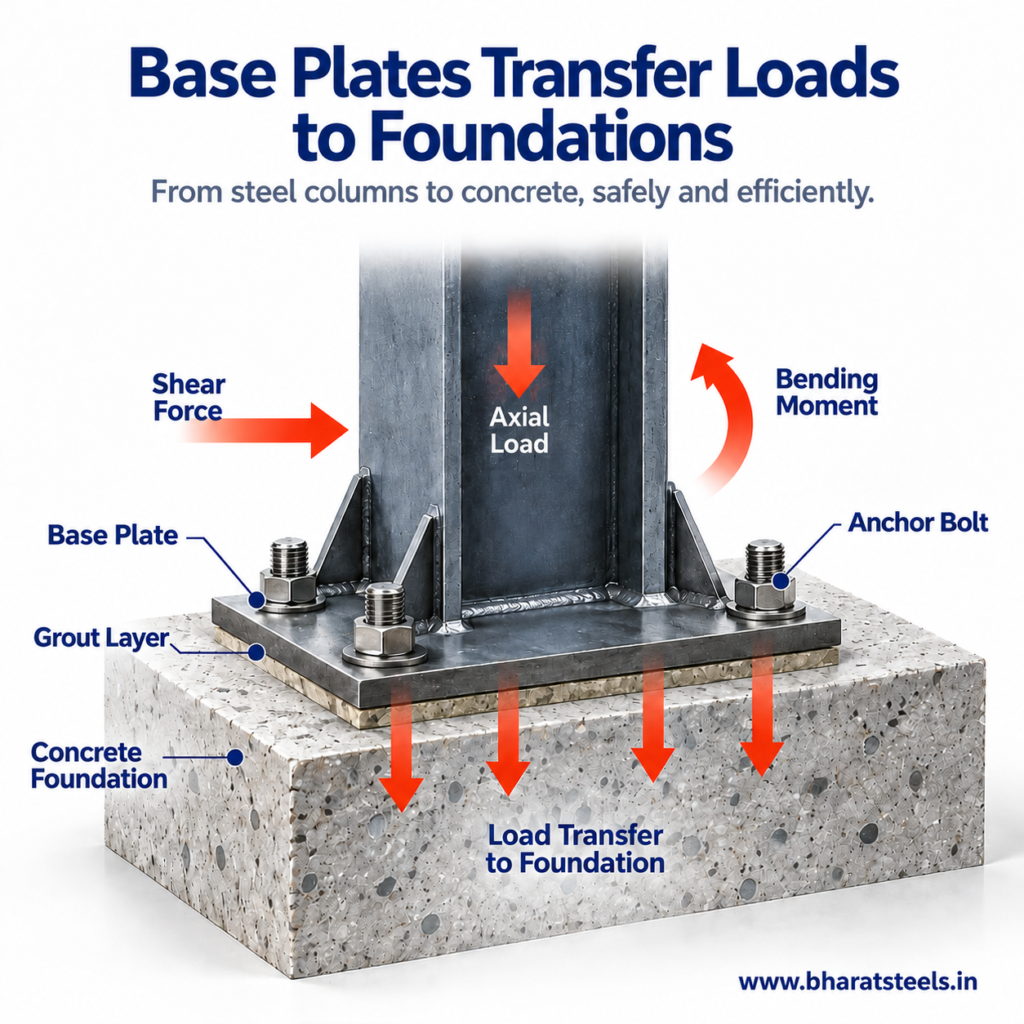
Steel column base plates play an important role in transferring structural loads from steel columns to concrete foundations. They help distribute the forces generated by the steel frame across an appropriate bearing area, forming an essential connection within the overall structural system.The role of the base plate is therefore not simply to provide a flat surface beneath the column. It forms part of the load path that allows forces developed in the steel frame to reach the foundation in a controlled manner. 

Base Plates Transfer Loads to to Foundation

In a steel structure, the performance of the overall frame depends not only on the main columns and beams but also on the components that connect them to the foundation. Base plates are one such important element, providing the interface through which steel columns are supported and their reactions are accommodated by the concrete foundation. 

For industrial and infrastructure projects, selecting suitable structural steel and associated components requires attention to material specifications, dimensions and fabrication requirements. Bharat Steel Chennai supplies a range of structural steel products and supports project-specific processing requirements, including components used in steel construction and fabrication 

The Journey of a Load Through a Steel Structure 

Steel column base plates provide the bearing interface required to transfer column reactions into the supporting concrete foundation.

Consider an industrial building with a steel frame. Loads applied to the roof are collected by secondary members and transferred to beams and columns. As these forces travel downward, the column becomes the final vertical member carrying them toward the foundation. At the bottom of the column, the force is concentrated within a relatively small steel section. The concrete foundation, however, must receive that reaction over a suitable bearing area. 

In this load-transfer arrangement, steel column base plates act as the connecting components between the vertical steel members and the supporting foundation.

The base plate provides the transition. By extending beyond the footprint of the column, the plate creates a larger contact area through which compressive forces can be introduced into the supporting concrete. The size of that area is determined by structural calculations rather than simply by the dimensions of the column section. This is where base-plate design becomes part of the wider structural system. 

For warehouses, manufacturing units and other steel-framed buildings, selecting the appropriate roofing material is therefore part of the broader building design. Crayon Roofings offers metal roofing sheets, colour-coated sheets, purlins and roofing accessories for industrial and commercial applications. 

Why the Size of a Base Plate Matters 

The dimensions of a base plate are closely related to the forces arriving at the column base and the capacity of the concrete beneath it. 

If the bearing area is insufficient, the pressure transferred into the supporting concrete can become excessive. Increasing the plate dimensions can distribute the reaction over a larger area, subject to the requirements of the structural and foundation design. 

But a larger plate alone does not make the connection adequate. 

The plate itself must also withstand the bending effects created by the supporting reaction. The portions extending beyond the column can behave as projecting regions, making plate thickness an important design consideration. Therefore, plate length, width and thickness are interconnected design parameters. 

The dimensions of steel column base plates must be established by considering the applied column reactions, concrete bearing capacity and the structural requirements of the connection.

How Plate Dimensions Are Established 

The design of steel base plates must account for the applied forces, bearing pressure and bending resistance required at the column base.

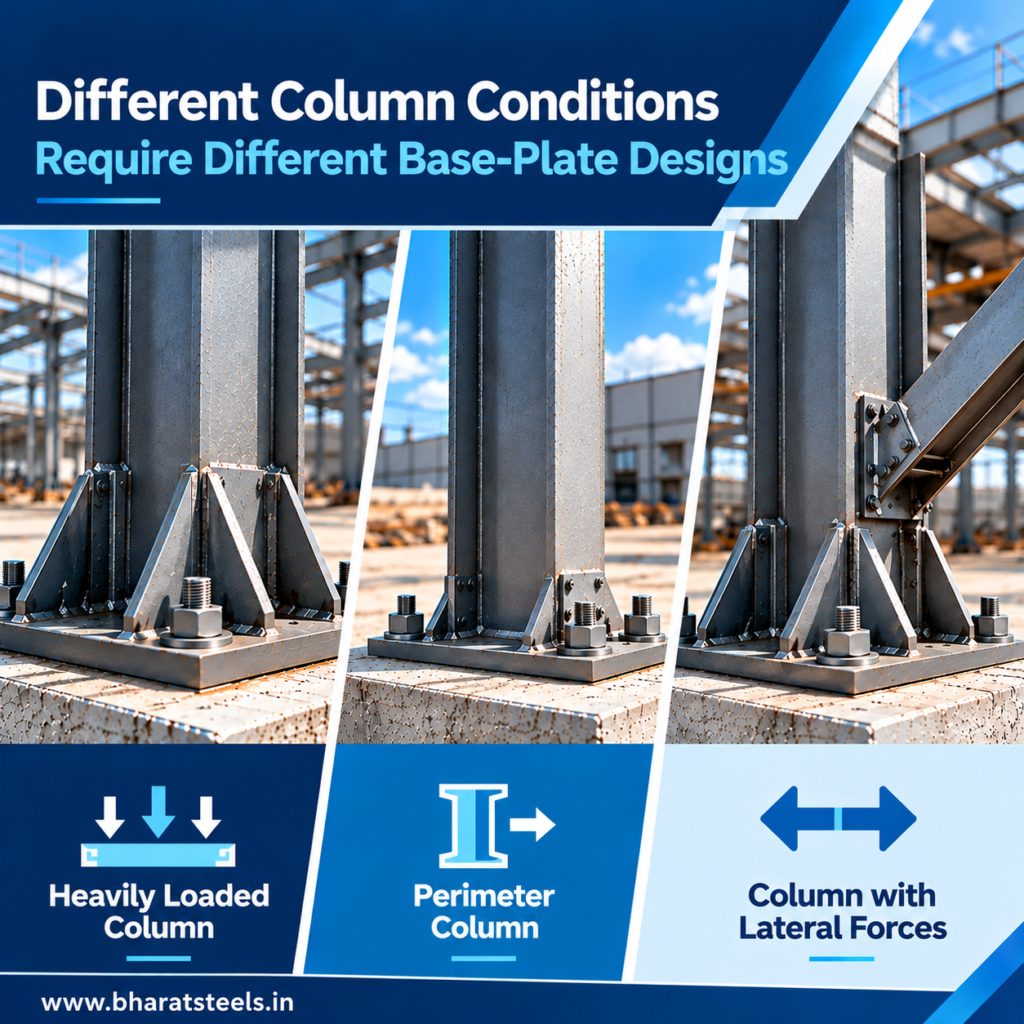
Column Base-Plate Conditions

As the supporting area extends beyond the column section, parts of the plate are subjected to bending caused by the pressure beneath them. The designer therefore must consider both the required bearing area and the plate’s ability to withstand these bending effects. 

This is why two columns within the same industrial building can require different base-plate arrangements. A heavily loaded column, a perimeter column and a column subjected to substantial lateral forces may each present different design conditions. 

Where Anchor Bolts Become Important 

The connection between anchor bolts and base plates must be detailed to accommodate the forces transferred from the steel column.

However, an anchor bolt cannot be considered independently. 

Its performance also depends on factors such as embedment, bolt arrangement, concrete strength, edge distances and the surrounding reinforcement. The concrete must be capable of developing the required resistance around the anchorage. 

The steel connection and concrete foundation therefore must be designed together. 

The Purpose of Anchor Bolts 

Anchor bolts hold the steel column assembly in its intended position relative to the foundation and become particularly important when tensile forces or significant moments are present. 

Their effectiveness depends on more than bolt diameter. 

Embedment depth, spacing, concrete strength, edge distances and the surrounding reinforcement all influence the anchorage. The foundation therefore must be detailed to accommodate the forces that the steel connection is expected to introduce. 

This is one reason column-base detailing requires coordination between the steel and concrete design teams. 

Where Shear Enters the Picture 

The connection may use different mechanisms depending on the design, such as friction, anchor bolts or dedicated shear-resisting details. The chosen arrangement depends on the expected force and the characteristics of the foundation and steel connection. 

For industrial buildings, this consideration can become significant where crane loads, wind effects or other operational forces create substantial horizontal reactions. 

The important engineering question is not simply how much shear exists, but how that shear will travel through the connection and into the supporting structure. 

How Foundation Requirements Influence Column Base Design 

The steel frame and foundation cannot be treated as completely independent systems. 

The column produces reactions that become inputs for the foundation design. At the same time, the dimensions and reinforcement of the foundation must accommodate the requirements of the column-base connection. 

The overall load path can therefore be viewed as: 

Steel frame → Column → Base plate → Grout/interface → Concrete foundation → Supporting soil 

A correctly designed steel column with an unsuitable foundation connection would still leave a weakness in the overall system. 

Fabrication Accuracy Matters 

Accurate base plate fabrication helps maintain the dimensional requirements needed for proper column positioning and foundation connections.

Once the design is finalised, the base plate becomes a fabricated steel component that must match the approved drawings. 

Each base plate must be produced to the dimensions and specifications defined in the approved drawings, with particular attention to thickness, column placement and anchor-bolt openings. For structures requiring multiple column assemblies, uniformity across fabricated components helps prevent fitting issues during installation and keeps erection work aligned with the construction plan.  

Dimensional accuracy also matters at the foundation itself. Anchor bolts must be positioned according to the approved setting-out information so that the fabricated column base can be installed without unnecessary adjustment. 

This creates a connection between structural design, steel fabrication and site execution. 

Why Base Plates Differ from Project to Project 

Steel column base plate selection varies according to the structural loads, foundation conditions and connection requirements of each building.

There is no single base-plate arrangement that can be applied to every steel building. 

A light industrial shed, a warehouse with heavy equipment, a crane-supported building and a multi-storey steel structure can all generate very different reactions at their column bases. 

The required configuration depends on factors such as: 

  • Column loads and reactions 
  • Base moments and shear forces 
  • Concrete strength and foundation geometry 
  • Anchor-bolt requirements 
  • Column section and orientation 
  • Structural stability system 
  • Applicable design standards 
  • Erection and construction requirements 

For this reason, base plates should be designed for the specific structural conditions rather than selected purely from standard dimensions. 

Base Plates in Industrial Construction 

In industrial buildings, base plate connections must accommodate the forces generated by columns, equipment loads and the overall structural arrangement.

The importance of column-base connections becomes particularly visible in industrial buildings because steel frames often must support large roof areas, equipment, mezzanines, cranes or other operational requirements. 

In these structures, the base connection must work within the overall structural system while also accommodating practical requirements during fabrication and erection. 

For project teams, this means base plates should not be viewed as minor accessories ordered after the main steelwork is finalised. They are engineered components whose requirements should be established alongside the column and foundation design. 

For businesses developing warehouses, manufacturing facilities or other industrial buildings, an Pre-Engineered Building approach can bring these structural elements together as part of an integrated building system. Metfraa provides PEB solutions covering structural design, fabrication and erection for industrial building requirements. 

From Structural Calculation to a Working Connection 

Proper base plate detailing helps coordinate the steel connection with anchor bolts, grout and the supporting concrete foundation.

A successful base connection represents several stages of engineering working together. 

The structural engineer determines the forces and connection requirements. The foundation designer provides the supporting concrete system. The fabricator produces the plate and column assembly to the approved dimensions. During erection, the foundation, anchor bolts, grout and steelwork are brought together to create the final connection. 

Only when these stages align does the intended load path become a functioning physical connection. 

That is why the base plate deserves more attention than its relatively small size might suggest. 

Conclusion 

The role of a base plate extends well beyond providing a flat surface beneath a steel column. It forms part of a carefully engineered connection that brings the steel frame and concrete foundation together. 

Its design must account for the actual forces at the column base, while its fabrication and installation must correspond with the foundation and erection requirements. Anchor bolts, grout, concrete and reinforcement all contribute to the completed connection. 

Ultimately, the effectiveness of a steel structure depends on continuity throughout its load path. The base plate is one of the key points where that continuity is established—connecting the steel column above with the foundation below and helping the structure transfer its forces safely toward the ground. Properly designed and fabricated base plates help maintain continuity in the load-transfer system between steel columns and concrete foundations.

If you are planning an industrial steel structure or require structural steel and project-specific steel processing, contact us with Bharat Steel. to discuss your material requirements and project needs with the team. 

Frequently asked questions  

1.What is the purpose of a base plate in a steel structure? 

A base plate provides the interface between a steel column and its concrete support, helping distribute the column reaction over an appropriate bearing area. 

2. How does a base plate transfer loads to the foundation? 

Forces from the steel column are transmitted through the base plate and supporting interface into the concrete foundation, which then distributes the resulting reactions through the foundation to the ground. 

3. Why are anchor bolts used with steel column base plates? 

Anchor bolts help secure the column assembly to the foundation and can resist tension and other forces generated at the column base, depending on the connection design. 

4. What factors influence the design of a steel column base plate? 

Column loads, bending moments, shear forces, column dimensions, concrete strength, bearing requirements and anchor-bolt arrangements are among the factors considered during design. 

Blog, Structural steel Base plates

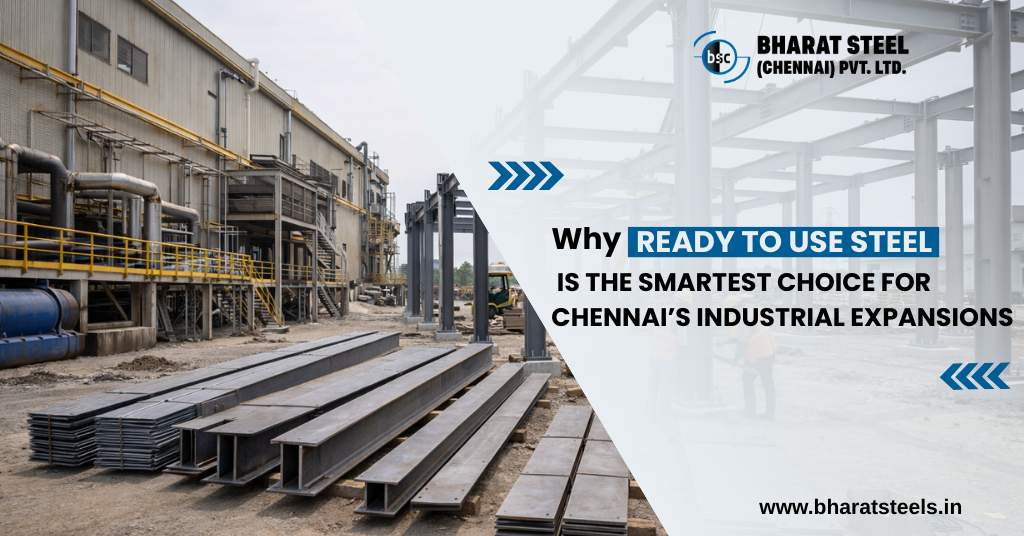
Why Ready to Use Steel Is the Smartest Choice for Chennai’s Industrial Expansions

February 18, 2026
Ready to use steel

As Chennai’s industrial sector develops quickly, it is still a prominent centre for manufacturing facilities, warehouse facilities, logistics parks and means the same for infra-structure all across the city. Construction techniques have been changing at an accelerated rate, owing to the diminishing amount of time available to execute work, and increasing market pressures. 

One of these methods that have changed significantly is ready-to-use steel. Industries may be moving away from purchasing steel in a raw form, as they have traditionally done, which requires significant processing on-site in terms of cutting and fabricating, to using pre-processed or pre-fabricated steel components which are delivered ready to be installed. The implementation of this method of steel usage as a standard practice for Chennai’s industrial expansion will occur by 2026, as it is considered to be an efficient and smart way of constructing buildings.

Understanding What Ready to Use Steel Means in Industrial Construction

Ready to use steel refers to steel components that are supplied in project-specific sizes and configurations, reducing the need for on-site processing. These materials are prepared based on drawings and application requirements, helping projects move faster and with greater accuracy.

In the industrial construction sector, components are typically factory produced, including but not limited to web plates, flat plates, base plates and flange plates, when delivered ready for installation.When delivered ready for installation, these components allow for quicker assembly and improved coordination in the field.

Why Chennai’s Industrial Expansion Needs Faster Steel Solutions Today

Industrial projects in Chennai face challenges such as limited construction windows, rising labor costs, and space constraints in urban and industrial zones. Traditional fabrication-heavy methods often slow execution and increase uncertainty.

Using ready to use steel products allows project teams to reduce their reliance on on-site fabrication, while decreasing delay time from cutting, drilling, & rework. Using this approach promotes shorter project schedules and greater predictability of timeframes – crucial for any factory or warehouse looking to be developed, built and commissioned quickly.

How Ready to Use Steel Reduces Total Project Cost

Although raw materials might cost less at first, the hidden costs associated with preparing them for use on a construction site typically exceed the savings of the raw materials. Thus, by preparing steel in advance, you will experience improved overall project cost effectiveness. 

Some of the primary benefits of cost savings from being prepared with steel include:

  • Reduced labor costs relating to preparing steel for use on construction projects
  • Reduced waste in the fabrication phase as a result of properly sized material sections
  • Minimizing the amount of rework as a result of obtaining correct dimensional tolerances 
  • Less equipment and power usage when using fabricated materials.

When flat plates and web plates are supplied in exact sizes, cutting losses are significantly reduced. Over large industrial projects, this directly impacts the bottom line.

Precision and Quality Advantages in Industrial Structures

Industrial steel structures require a high level of quality control for proper alignment, load distribution and performance over time.

Prefabricated steel parts provide:

  •  Greater accuracy of dimensions
  •  Consistent thickness and surface finish
  •  Improved accuracy of fit during construction
  •  Higher degree of structural integrity

Flanges plates and base plates benefit especially from this precision, as they play a direct role in beam connections and column stability.

How Prepared Steel Improves Site Safety and Compliance

On-site fabrication increases safety risks due to cutting, welding, and handling operations. Reducing these activities makes construction sites safer and more organized.

The use of pre-fabricated steel helps in the following ways:

  1. Minimize the cutting and welding work
  2. Minimize the movement of heavy construction equipment
  3. Create a safer, cleaner work area
  4. Reduce the risk of accidents during installation

For industrial construction projects, it is becoming increasingly important that your industrial construction project meets the safety standards.

Suitability for Chennai’s Climate and Urban Conditions

Chennai’s coastal climate, high humidity, and dense industrial zones demand efficient execution. Prolonged site work often leads to delays and exposure-related issues.

With ready to use steel, installation can be completed faster during favorable weather windows. Reduced site processing also limits material exposure and helps maintain consistent quality, especially for warehouses and industrial sheds.

How Ready to Use Steel Simplifies Industrial Procurement

The use of prepared steel has made the entire procurement process more manageable.

The benefits of using ready to use steel include:

  •  Clarity of material specifications
  •  Improved inventory control
  •  Fewer vendors to deal with
  •  Streamlined logistics of the project

With ready to use web plates, base plates, flat plates, and flange plates, procurement teams have been able to align their deliveries more closely with the timing of construction progress.

Importance of Reliable Local Supply in Chennai

The availability of quality steel is just as important as having prepared steel or ready-to-use steel. Keeping supplies timely and specifications accurate prevents slowing down the pace of work.

Bharat Steel Chennai provides ready-to-use steel to meet the expansion needs of industry in chennai by sourcing product locally, lead times are significantly reduced and coordination levels improved. This allows for a quicker response to either design or quantity changes.

Conclusion:

With industrial growth moving faster in Chennai, construction methods need to focus on being efficient, safe, and produce a finished product with greater accuracy than ever before. Ready to use steel provides all three benefits: with less job site work better dimensional accuracy and faster completion of projects.

By 2026, industries using this strategy will achieve an advantage over competitors with regard to delivery times and long term performance. Selecting ready to use steel will not only be selecting a material, it will also represent a commitment to smarter, more dependable industrial progress. For project-specific recommendations and orders, Contact Bharat Steel Chennai.

Frequently Asked Questions 

Q.What is ready to use steel in industrial construction

A.Ready to use steel refers to steel components that are pre-processed, cut to size, and prepared for installation, reducing the need for on site fabrication.

Q.Why is ready to use steel preferred for Chennai’s industrial expansions

A.Ready to use steel helps industries in Chennai reduce construction time, control labor costs, and manage projects better under tight timelines and local site constraints.

Q.Does ready to use steel reduce overall project cost

A.Yes. Although the material cost may appear higher initially, ready to use steel reduces labor expenses, material wastage, rework, and equipment usage, lowering the total project cost.

Q.What types of components are supplied as ready to use steel

A.Common ready to use steel components include web plates, flat plates, base plates, and flange plates, all supplied based on project specific requirements.

Q.Is ready to use steel suitable for heavy load industrial structures

A.Yes. When correctly specified, ready to use steel components perform reliably in heavy load applications such as factories, warehouses, and industrial sheds.

Blog, Ready to use steel Base plates, Flanges, Ready to use steel, Webs

Recent Posts

  • Why E250 & E350 Plates Price Varies Across Thickness and Dimensions 
  • Why Factory Cut Ready to Use Steel Is Reducing Project Delays in Industrial Expansion Projects 
  • The Function of Base Plates in Transferring Structural Loads from Steel Columns to Foundations 
  • The Dependence of Modern Logistics Parks on Advanced Structural Steel Sections
  • The Future of Construction Depends on Reliable TMT Bar Suppliers

Idealist by NewMediaThemes