
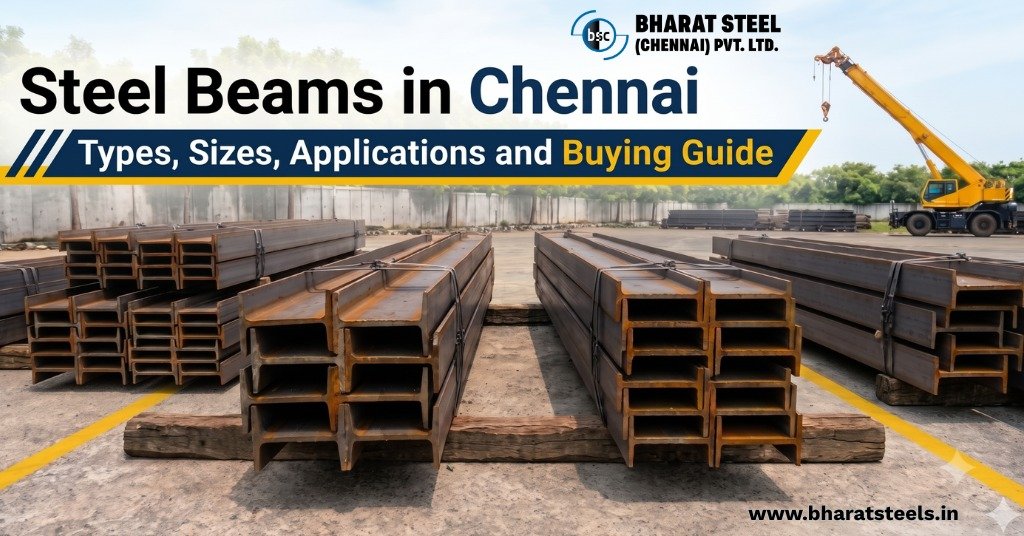
Steel beams in chennai serve as essential load-bearing members in buildings, helping transfer structural forces to columns and other supporting elements while maintaining overall stability. They form an important part of industrial sheds, factories, commercial buildings, warehouses and infrastructure projects. The choice of beam section varies according to the building design, span, applied loads and structural requirements.
When selecting steel beams in Chennai for a project, its dimensions, material grade, weight and intended application need to be considered together. A suitable section should meet the engineering specifications while also supporting practical requirements such as fabrication, transportation and installation.
Bharat Steel Chennai supplies structural steel materials for industrial, commercial and infrastructure projects, driving steady demand for steel beams in Chennai. The company works with contractors, fabricators and project teams to support their material procurement requirements.
1. What Are Steel Beams in Construction?
Structural steel beams are used as load-carrying members in buildings and engineered structures. They receive forces from connected components, including floors and roof systems, and pass these loads to columns, walls or other supports.
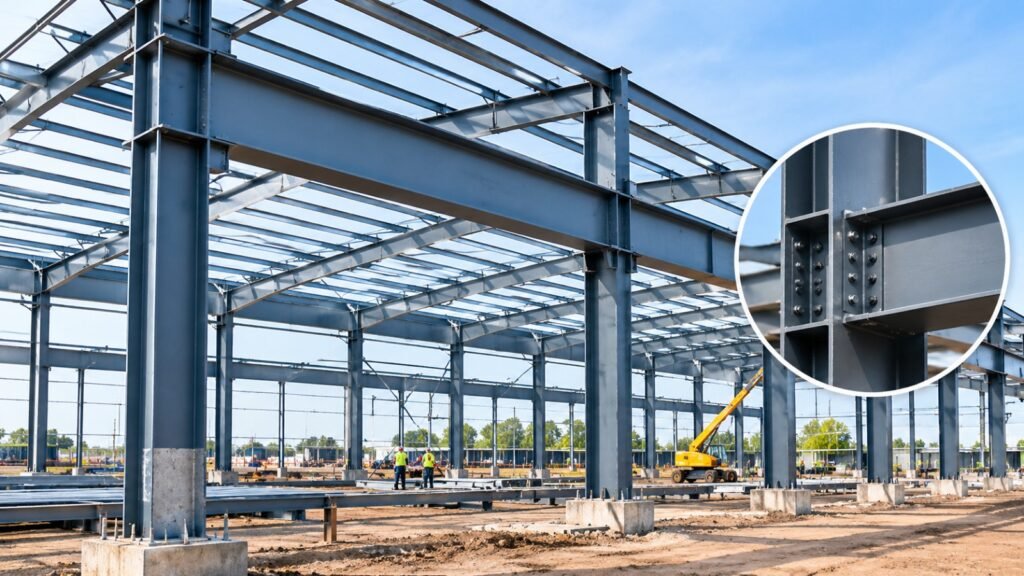
A beam’s cross-sectional profile affects how it responds to applied forces. During operation, it may undergo bending, shear and deflection, with its behaviour influenced by material strength, dimensions, span and support conditions.
These properties make steel beams in Chennai suitable for a variety of construction and fabrication projects where structural performance and ease of assembly are important.
2. Different Steel Beam Profiles Used in Steel Beams in Chennai Projects
Structural sections are manufactured in different profiles to suit various engineering applications. Their shape, flange arrangement and web dimensions influence their structural properties and suitability for specific designs.
ISMB – Indian Standard Medium Beam
ISMB refers to Indian Standard Medium Beam. These hot-rolled sections have an I-shaped profile with tapered flanges and are commonly specified for structural frameworks when sourcing steel beams in Chennai.
Each section is identified by a nominal depth designation. The corresponding flange dimensions, web thickness, sectional properties and unit weight should be checked using the applicable section tables before selection.
NPB – Narrow Parallel Beam
NPB sections are characterised by parallel flange surfaces and a relatively narrow flange profile. Their dimensional specifications and sectional properties vary according to the selected designation.
These sections should be selected based on the requirements given in the structural drawings and the relevant product specifications when ordering steel beams in Chennai.
H-Beams
H-beams have a profile resembling the letter H, with broad flanges joined by a central web. Their cross-sectional proportions distinguish them from other I-shaped structural sections.
The actual dimensions and properties depend on the particular section size and applicable manufacturing standard. Engineers should refer to the correct product designation when incorporating these sections into a design.
I-Beams and Other Structural Sections
I-beam is a general term used to describe structural profiles with an I-shaped cross-section. Different types may have variations in flange width, thickness and overall dimensions.
The exact section classification should be established from the relevant product standard rather than relying on its visual appearance alone.
3. Selecting Steel Beams in Chennai Sizes, Dimensions and Unit Weight
Identifying steel beams in Chennai involvesmore than checking its nominal depth. Two sections with a similar overall depth may have different flange proportions, web dimensions and load-resisting characteristics.
The section designation and dimensional data should therefore be considered together when comparing products or preparing a material requirement.
Important Dimensions of a Steel Beam
The following measurements help identify the characteristics of a beam section:
- Nominal Depth: The overall vertical dimension measured between the outermost top and bottom surfaces of the section.
- Flange Width: The horizontal measurement across the flange.
- Web Thickness: The thickness of the central vertical portion connecting the flanges.
- Flange Thickness: The thickness of the upper and lower flange material.
- Unit Weight: The mass of the beam expressed in kilograms per metre (kg/m).
- Sectional Properties: Measurements that describe a beam’s cross-section, including its area and resistance to bending.
How to Calculate the Total Weight of a Steel Beam
Unit weight indicates how much a particular beam section weighs for every metre of its length. It is useful when estimating the total material requirement,transportation load and purchase quantity for steel beams in Chennai.
The actual unit weight must be obtained from the relevant manufacturer’s section table or applicable product specification. Nominal dimensions alone should not be used to estimate an exact weight.
4. Applications of Steel Beams Across Different Industries
The use of a beam depends on the purpose of the structure and the loads it needs to support. From large industrial facilities to specialised access structures, different sections are incorporated into engineered frameworks.
Industrial Buildings and Factory Sheds
Manufacturing plants and factory buildings use structural beam sections in their main frameworks, roof-support arrangements and elevated platforms built with steel beams in Chennai. The selected configuration depends on building dimensions, equipment placement and the operational requirements of the facility.
For industrial developments involving pre-engineered building systems, Metfraa Steel Buildings provides services covering structural fabrication and building erection.
Commercial and Multi-Storey Buildings
Office complexes, retail developments and multi-storey buildings may incorporate steel beams in chennai into floor-support systems, building frames and structural extensions.
The beam arrangement is determined by the architectural layout, floor loading, column positions and the overall engineering design.
Warehouses and Storage Facilities
Warehouses require structural arrangements that accommodate storage areas, material movement and loading operations. Steel beams can form part of the building framework, mezzanine structures and elevated storage-support systems using steel beams in Chennai.
Their dimensions and spacing are established according to the intended use of the facility and the loads involved.
Metal Roofing Solutions for Industrial and Commercial Buildings
Roofing systems are an important part of industrial and commercial building construction. The selection of suitable roofing sheets depends on factors such as weather exposure, building design and functional requirements.
Alongside structural components, colour-coated metal sheets provide an external covering for many industrial and commercial facilities. Crayon Roofings & Structures supplies metal roofing sheets and related roofing products for these applications.
Bridges, Walkways and Infrastructure Projects
Engineered infrastructure may use steel beam sections in bridge elements, pedestrian walkways, access platforms and supporting frameworks.
These structures require detailed engineering checks for load capacity, deflection, fatigue resistance, stability and exposure to environmental conditions.
Equipment Supports and Fabricated Structures
Industrial plants may incorporate beams into machinery foundations, material-handling frameworks and maintenance access structures. Their use depends on equipment weight, operating loads and the arrangement of connected components.
Fabrication details, including joint locations, welding requirements and connection dimensions, must follow the approved engineering drawings.
5. Key Factors to Consider When Choosing a Steel Beam
Selecting suitable steel beams in Chennai requires of the project’s engineering details and material specifications. The following considerations help establish whether a particular beam is appropriate for the intended structure.
Structural Loads and Design Requirements
Determine the forces that the beam will encounter during operation. These may include the weight of permanent structural components, occupancy-related loads and forces generated by equipment or other activities.
Engineering calculations must evaluate bending effects, shear resistance, allowable deflection and structural stability before a section is finalised.
Span and Support Conditions
The distance between supporting points has a direct influence on beam behaviour. The type of support, end restraint and connection arrangement also affect how forces are distributed through the member.
A beam designed for a longer span may require different strength and stiffness characteristics from one used over a shorter distance. The final dimensions should be established through structural calculations.
Sectional Properties
Cross-sectional area, moment of inertia and section modulus are important values used during structural evaluation.
These properties help engineers understand how a section responds to applied forces and whether its dimensions are appropriate for the proposed arrangement.
Material Grade and Quality Requirements
The specified steel grade should correspond to the engineering requirements of the project and the applicable material standard.
Before accepting a supply, compare the material details with the approved drawings and technical specifications. Where required, obtain inspection records and quality certificates, including the relevant Material Test Certificate (MTC).
Connection and Fabrication Requirements
The way a beam joins with columns, plates, brackets and adjoining members should be established during the design stage.
Connection details may involve bolting, welding, drilling, cutting and end preparation. These operations should follow the approved fabrication drawings to maintain dimensional accuracy and assembly requirements.
6. Factors That Influence Steel Beam Prices in Chennai
The purchase cost of a beam is determined by several product-related and commercial considerations. A meaningful quotation comparison should account for the complete material specification rather than focusing only on the quoted rate.
Beam Type and Section Designation
Different beam profiles have different dimensions, sectional properties and manufacturing specifications. The exact designation should be included in the purchase enquiry so that the quotation refers to the intended product.
Unit Weight and Required Length
The weight per metre and total length determine the quantity of steel required for a project. These details are important when estimating the overall material value and transportation requirements.

Order Quantity
The number of pieces and aggregate weight can influence the commercial terms offered for an order. Pricing arrangements may differ between bulk requirements and smaller quantities, depending on supply conditions.
Manufacturer and Product Source
Product origin, manufacturing specifications and quality documentation are relevant when comparing quotations. Buyers should evaluate equivalent sections that meet the same technical requirements before making a purchasing decision.
Steel Market Conditions
Changes in raw material costs, manufacturing prices and market demand can influence structural steel quotations. Since these factors may change over time, the validity period of a quotation should be checked before confirming an order.
Transportation and Delivery
The delivery cost depends on the distance to the destination, vehicle capacity, loading arrangements and material handling requirements.
Before placing an order, clarify freight charges, unloading responsibilities and the expected delivery date to avoid misunderstandings during dispatch.
7. How to Buy Steel Beams in Chennai: A Practical Procurement Checklist
Providing complete material details helps suppliers understand the requirement and prepare a quotation that matches the intended application.
Essential Details to Provide When Requesting a Quotation
- Beam Type: Mention the required profile, such as ISMB, NPB, H-beam or another specified section.
- Section Designation: Share the complete identification code shown in the structural drawings.
- Material Grade: State the required steel grade and applicable material specification.
- Required Length: Specify the length of each piece, including any project-specific cutting requirements.
- Quality Documentation: Indicate whether MTCs or additional inspection records are required.
- Delivery Location: Provide the destination where the material needs to be supplied.
- Delivery Schedule: Mention the expected date by which the material should reach the project site.
- Commercial Terms: Clarify applicable taxes, freight, unloading arrangements, payment conditions and quotation validity.
Reviewing these details before confirming an order can help reduce specification mismatches, dispatch delays and avoidable procurement issues.
Conclusion
Steel beams in Chennai serve a wide range of structural purposes, and selecting the appropriate section requires an understanding of their profiles, dimensions, weight and engineering characteristics. Evaluating the project design alongside material specifications and commercial requirements helps ensure that the chosen product is suitable for its intended use.
At Bharat Steel Chennai, we support industrial, commercial and fabrication projects through our range of structural steel products. As an authorised distributor of SAIL steel products, we work with customers to address their material procurement requirements.
For product enquiries, specifications or pricing details, Contact Us to discuss your project requirements.
Frequently Asked Questions
1. How can I get a quotation for steel beams in Chennai?
Customers can contact Bharat Steel Chennai to enquire about structural steel requirements and request a quotation. Pricing may vary depending on the beam section, dimensions, material grade, quantity and prevailing market conditions.
2. What are the most commonly used steel beam sections in construction?
ISMB, NPB, H-beams and I-beams are commonly used structural beam profiles. The right section depends on the structural design, load requirements and intended application.
3. How do I identify the correct steel beam size and weight?
Check the beam designation, nominal depth, flange width, web thickness and unit weight. Refer to the relevant section specifications to confirm the exact dimensions and weight per metre.
4. Where are structural steel beams commonly used?
Steel beams are used in industrial sheds, factories, warehouses, commercial buildings, bridges and equipment-support structures. Their application depends on the required load capacity and engineering design.
5. What should I check before purchasing steel beams in Chennai?
Confirm the beam type, section designation, steel grade, required length and quantity before placing an order. Also check quality documents, delivery arrangements and the supplier’s quotation.