Natural hazards such as earthquakes, cyclones, heavy rainfall and strong winds can place significant stress on buildings and infrastructure. As urban development and industrial construction continue to expand, choosing appropriate building materials and implementing sound engineering practices have become essential for improving structural resilience.
Steel plays an important role in modern construction because of its strength, versatility and ability to be fabricated into different structural components. From reinforcement bars used in concrete foundations to structural sections and roofing supports, the right materials contribute to a building’s ability to withstand the loads anticipated during its service life.
However, resistance to natural hazards depends on the complete structural system, including design, foundations, connections, material quality and construction workmanship.
Understanding the Impact of Natural Hazards on Buildings
Different environmental events affect buildings in different ways. Earthquakes generate ground movements that place lateral forces on structural members. Cyclones and severe storms create wind pressure and suction, particularly on roofs and external cladding.
In coastal and industrial environments, moisture and corrosive atmospheric conditions may also accelerate deterioration if materials are not adequately protected.
Understanding these risks during the planning stage allows designers to select suitable materials and incorporate appropriate protective measures. The objective is not simply to construct a strong building, but to create a structure that performs reliably under the conditions for which it has been designed.
1. TMT Reinforcement Bars for Improved Structural Performance
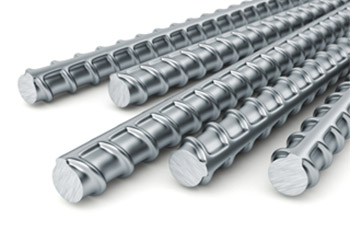
Thermo-Mechanically Treated (TMT) bars are widely used in reinforced concrete construction, including foundations, beams, columns and slabs. Their mechanical properties make them suitable for combining with concrete to resist structural loads.
For buildings designed to withstand seismic forces, reinforcement must meet the specified requirements for strength, ductility and elongation. Ductility is particularly important because it allows structural members to undergo controlled deformation before reinforcement fractures.
During an earthquake, appropriately designed and detailed reinforced concrete elements can accommodate movement and dissipate energy. Nevertheless, this performance depends on correct reinforcement placement, confinement, anchorage, lap splices and compliance with applicable seismic design provisions.
When procuring TMT bars, builders should verify the specified grade, relevant Indian Standard requirements and material test certificates. Selecting reinforcement based solely on advertised strength or price may overlook important mechanical properties required by the structural design.
2. Structural Steel for Strength and Design Flexibility
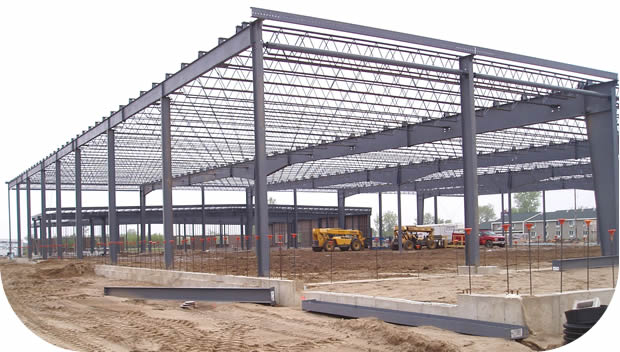
Structural steel sections are commonly used in industrial buildings, warehouses, manufacturing facilities and commercial developments. Beams, columns, channels and other profiles form the framework that supports the building and transfers loads to its foundations.
Steel structures can be engineered to accommodate different spans, building configurations and loading conditions. Their performance under strong winds or seismic activity depends on the selected sections, bracing arrangements, connection design and overall structural configuration.
For industrial facilities, engineers must consider factors such as equipment loads, roof-mounted services, operational requirements and the forces expected during extreme weather events.
Quality-assured structural steel that matches the approved specifications helps fabricators and contractors maintain consistency throughout construction. Proper fabrication, bolting, welding and corrosion protection are equally important for achieving the intended structural performance.
3. C and Z Purlins for Roofing Support
Purlins are secondary framing members that support roofing sheets and transfer loads to the main structural framework. C and Z purlins are frequently used in industrial sheds, factories, warehouses and other steel-framed buildings.
During severe weather, roofs can experience substantial wind uplift and pressure variations. Purlin dimensions, spacing, bracing and connections must therefore be selected according to engineering calculations and the roofing system’s requirements.
The choice between C and Z sections depends on the building layout, span arrangements, loading conditions and installation details. Suitable corrosion protection is also important where moisture, condensation or coastal exposure could affect service life.
Correctly designed purlins contribute to a reliable roofing assembly, but they must work together with adequately designed roof sheets, fasteners, primary frames and supporting connections.
4. Corrosion Protection for Long-Term Durability
Material deterioration can reduce the reliability of building components over time. Steel exposed to moisture, industrial pollutants or coastal conditions may corrode if its surface is not appropriately protected and maintained.
Depending on the application, protective coatings, galvanised finishes and suitable painting systems can help limit corrosion. The appropriate solution depends on the environmental exposure, component specifications and expected maintenance requirements.
Routine inspections can identify damaged coatings, water accumulation, loose fasteners and other developing problems before they become more serious.
Corrosion protection does not make steel immune to deterioration. Instead, combining appropriate material selection with correct installation and planned maintenance helps preserve its intended performance.
5. Foundations and Structural Connections Matter
Even high-quality construction materials cannot compensate for inadequate foundations or poorly designed connections. Foundations must transfer building loads safely into the supporting soil, taking account of ground conditions, settlement and relevant environmental hazards.
In steel-framed buildings, connections between beams, columns, braces and roof members play a critical role in transferring forces throughout the structure. For earthquake-resistant buildings, engineers must consider the complete load path, ductile detailing and the applicable seismic design requirements A coordinated approach to structural design is therefore essential for achieving reliable performance.
6. Choosing Materials Based on Project Requirements
Material procurement should begin with the approved structural drawings and technical specifications. Builders and contractors should confirm the required steel grade, section dimensions, thickness, mechanical properties and applicable quality standards before placing orders.
Proper transportation, storage and handling also help prevent avoidable damage or deterioration before installation.
For projects in Chennai and across Tamil Nadu, local environmental exposure, including coastal humidity and seasonal storms, may influence material protection and maintenance requirements. However, the appropriate design measures must be determined according to the actual site conditions and relevant engineering standards.
Working closely with structural consultants, fabricators and material suppliers helps minimise specification mismatches and supports better project coordination.
Conclusion
Building resilience against natural hazards requires a combination of suitable materials, sound engineering and consistent construction practices. TMT reinforcement bars, structural steel sections and C and Z purlins each serve specific purposes within a building’s structural system.
Their effectiveness depends on correct specification, verified quality, suitable connections and compliance with the relevant design requirements. Protective coatings, appropriate foundations and regular maintenance further contribute to long-term durability.
Bharat Steel Chennai supports construction and industrial procurement requirements through its steel product portfolio, including reinforcement and structural steel products. By selecting materials that match approved engineering specifications and coordinating procurement with project requirements, builders can contribute to safer, more durable infrastructure.
Ultimately, resilience is achieved through the performance of the complete building—not through any single product. Careful planning and responsible material selection remain fundamental to creating structures designed for challenging environmental conditions.