
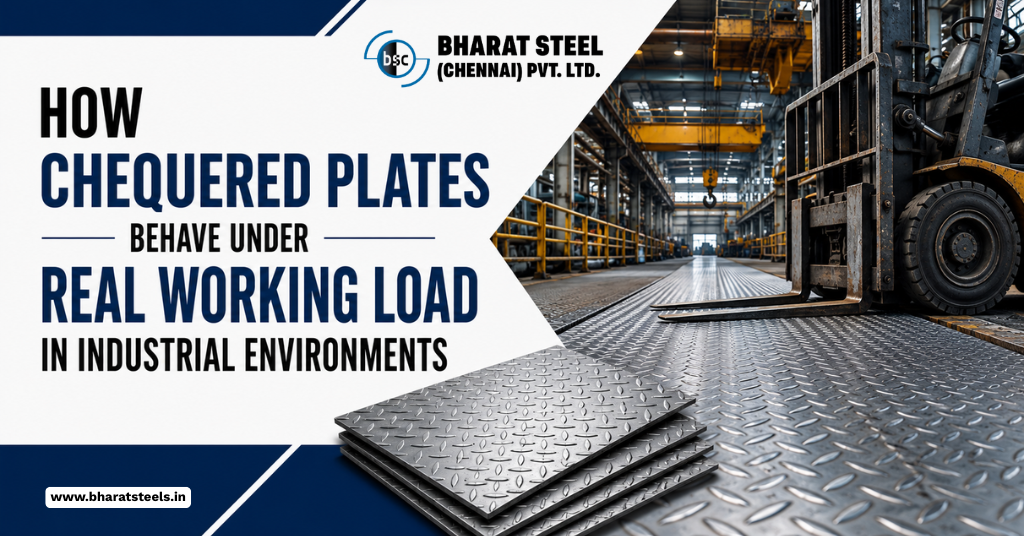
Industrial spaces deal with heavy machines, constant movement, and tough working conditions every day. In factories, warehouses, loading docks, and mezzanine floors, the flooring needs to stay strong and safe even under continuous pressure and regular use. That is why Chequered Plates are commonly used in industrial flooring applications and modern pre-engineered industrial buildings.
Chequered Plates are popular because they offer good grip, strength, and durability. They are widely used in factory walkways, warehouse platforms, staircases, and machine areas where heavy loads and daily movement are common. Their raised pattern helps reduce slipping, making them a practical choice for industrial environments.
Compared to plain steel sheets, Chequered Plates can handle working loads more effectively and provide better stability. However, their long-term performance depends on factors such as plate thickness, steel quality, installation, support structure, and exposure to moisture or harsh conditions. Understanding how these plates behave under real working loads helps industries choose the right flooring solution for safety and long-term use.
How Chequered Plates Perform Under Heavy Industrial Loads
The real test of quality in Chequered Plates comes when subjected to extensive industrial use. Floor systems must withstand repetitive stresses each day, and poor-quality material tends to bend, deteriorate surface, and become structurally compromised.
Quality Plates are manufactured to withstand flexure and maintain their structural integrity against loads. But maintaining performance depends on the proper choice of thickness and spacing for the floor support.
When thin steel plates are used in heavily loaded areas without adequate support, the floors tend to deflect and lose integrity. That is why industrial designers need to do a careful analysis of the expected loads before choosing robust floor plates.
But even quality steel plate systems can fail early due to:
- Wrong spacing of the support
- Poor welding
- Underestimating load requirements
It is just as important to install floor systems well as manufacture them.
How Chequered Plates Improve Slip Resistance in Industrial Conditions
The safety aspect plays a key role when it comes to the selection of chequered plates. Slippery flooring can cause significant safety hazards, especially where there is water, chemical substances, oils, or dust particles present in the environment.
The texture of chequered plates makes it easier to achieve stability during movement on the floor. In comparison to other steel plates, anti-slip steel plates provide stability not only for people but also for machinery and equipment used in the manufacturing process.
they are highly valued in situations including:
- Wet processing zones
- Open-air steel structures
- High-oil zones in factories
This ensures a safe operation and helps in maintaining the flow of activities.
How Chequered Plates Maintain Structural Stability Under Industrial Loads
The long-term efficacy of Chequered Plates becomes clearer over prolonged industrial operations since flooring constantly gets subjected to stress. Inferior materials tend to become deformed or show signs of wear and tear over a period.
Chequered Plates that are of high quality are designed not to bend and to remain structurally sound under industrial stress. However, performance ultimately depends on the proper selection of thickness and correct under-flooring support spacing.
Inappropriate use of thin plates for high-stress industrial areas will cause such flooring to sag due to inadequate support spacing, which makes it necessary for engineers to make calculations beforehand in terms of the loads they might bear before purchasing such flooring.
Environmental Conditions That Affect the Durability of Chequered Plates
The industrial setting imposes conditions other than direct loading on the floor; environmental conditions such as moisture, exposure to chemicals, weather conditions, and variations in temperature may have an impact on chequered plate durability.
Untreated steel in a humid and corrosive environment is highly susceptible to corrosion, leading to structural weakness of the flooring system and increased costs for maintenance.
Many industrial companies use corrosion-resistant steel plates coated with anti-corrosive materials or galvanized to increase the durability of chequered plates used in an industrial setting.
Steel, according to the World Steel Association, continues to be the most reliable material available in the industry today because of its durability and performance.
Maintaining steel floors and inspecting them on regular basis will improve their durability through detection of:
- Wear on the surface
- Corrosion development
- Damage to the structure
- Instability of the support
Maintenance will minimize the risk of failures.
Factors to Consider Before Selecting Chequered Plates
Selecting the right Plates depends on the working environment and operational load requirements. Choosing the wrong specification can affect both safety and long-term durability.
Important factors to consider include:
- Load intensity and traffic movement
- Environmental exposure conditions
- Plate thickness and steel grade
- Surface protection requirements
Heavy-duty industrial flooring applications usually require thicker wear-resistant steel plates capable of handling continuous machinery movement and operational stress.
Businesses also prefer sourcing industrial steel materials from reliable distributors who supply certified products suitable for demanding industrial environments. In South India, Bharat Steel Chennai supplies structural steel products and industrial steel materials used across manufacturing, infrastructure, and construction sectors.
Conclusion:
Chequered plates have continued to be recognized as some of the most reliable choices for industrial flooring applications due to their ability to bear substantial loads, their non-slippery surfaces, and their superior durability. Indeed, in practice, chequered plates have been found to suit numerous industrial applications, such as flooring factories, flooring warehouses, steel platforms, and industrial walkways.
Despite this, the efficiency is highly reliant on the appropriate selection of the right thicknesses, use of high-grade steels, installation in supportive structures, as well as protective coatings when necessary to increase their longevity and safety.
For high-quality chequered plates that are known to offer structural efficiency, increased safety, and extended lifespans in challenging industrial applications, Please Contact Bharat Steel Chennai.
Frequently asked questions (FAQ):
Q. What are Chequered Plates used for in industries?
A. Chequered Plates are used for industrial flooring, walkways, staircases, loading platforms, and vehicle flooring because they provide strength, durability, and anti-slip protection.
Q. Are Chequered Plates suitable for heavy industrial loads?
A. Yes, Chequered Plates are designed to handle heavy industrial loads when the correct thickness, steel grade, and support structure are used.
Q. How do Chequered Plates improve workplace safety?
A. Chequered Plates improve workplace safety through their raised surface pattern, which increases grip and reduces slipping risks in wet, oily, or dusty environments.
Q. Do Chequered Plates rust in industrial environments?
A. Chequered Plates can develop rust if left untreated in moisture-prone environments. Galvanized or coated plates offer better corrosion resistance and longer service life.
Q. What thickness of Chequered Plates is best for industrial flooring?
A. The ideal thickness depends on the load requirement and application. Heavy-duty industrial flooring usually requires thicker Chequered Plates for better structural stability and durability.