Skip to content

Bharat Steels

Blog

  • Home
  • About Us
  • Long Products
    • TMT Rebars
    • M.S.Angles
    • M.S.Channels
    • M.S.Beams
    • M.S.Rounds
  • Flat Products
    • H.R.Sheets
    • M.S.Plates
    • MS Flates / GI Flates
    • Chequered Plates
  • Weight Calculator
  • Roofing
  • PEB
  • Blog
  • Contact
  • Download
Bharat Steels

Tag: Steel pipe

Different Applications Of Cold Rolled Steel

March 8, 2022
Cold Rolled Steel

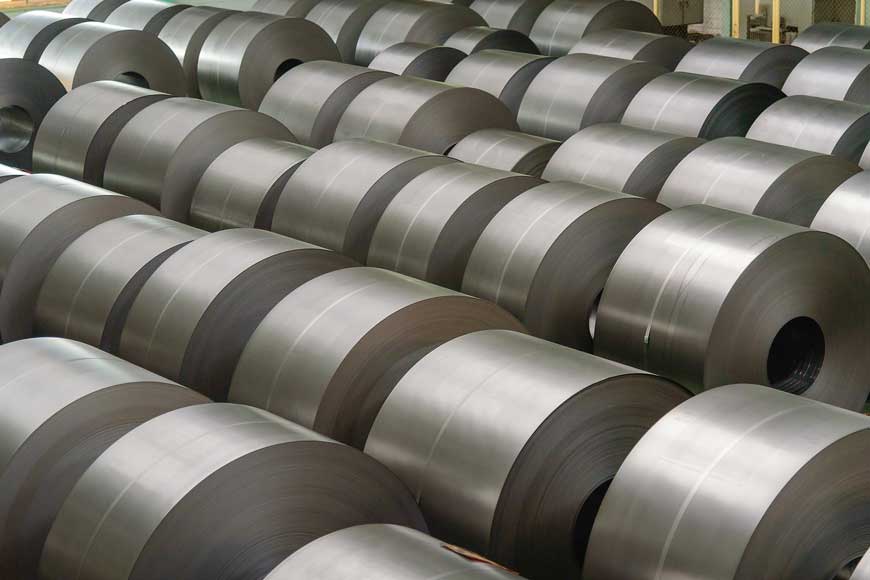
We have heard of steel being used in every process where durability and strength matters. We even know that steel cannot be used directly in the application and must be fabricated according to the needs. So, cold rolling is one such fabrication process to enhance the physical properties of the steel. In the cold rolling process, the steel dealers or manufacturers strengthen the steel by changing its shape without heat or pressure. The large steel coils are passed through the two parallel rollers keeping the temperature below the steel’s recrystallization temperature. Thus, the steel coils unwind, and each steel strip is squeezed and compressed. Hence, the resulting metal strips have increased hardness and yield strength. Therefore, one can say that cold rolling the metal strips is one of the significant functions in metalworking industries. Hence, in this post, let us see the different applications of cold-rolled steel in various industries.

Cold-rolled steel in construction:

The foremost application of cold-rolled steel is in the construction and development sector. We all know that steel is essential to make your building stand against the various climatic conditions. Similarly, cold-rolled steels are used significantly in the construction industry for framing purposes. The cold-rolled steels are light in weight and yet stronger than other metal framings. The cold-rolled framings are used in multi-storey building construction like hotels, dormitories, and related structures.The cold-rolled MS chequered plate are even used for the flooring purposes.

As mentioned earlier, cold-rolled steel is less in weight, and hence it can be shipped and assembled later. Similarly, the cold-rolled steel exhibits high tensile strength; it is sufficient to use fewer steel materials for structural support and reduces resource consumption. The cold-rolled steel is used in making bolts and screws for metal sheeting and sheeting rails.

Cold-rolled steel in home appliances:

Another application of cold-rolled steel is that they are used in home appliances extensively. It is hard to find even one home appliance without cold-rolled steel. The cold-rolled steel is used in washers, dryers, water heaters, computer hardware, refrigerators, and related household things. One can find numerous domestic appliances with cold-rolled steel because they have a higher tolerance than the other metals. Similarly, these steels have excellent tensile and yield strength, making them an ideal material for home appliances. Hence, cold-rolled steel is one such versatile material with an exceptional surface finish. 

Cold-rolled steel in pressure vessels:

Pressure vessels are enclosed containers where the core of any material is placed under extreme pressure. These vessels play a vital role in the petrochemical and nuclear plants. The cold-rolled steel is used in the pressure vessels because of their elongation rate, toughness, embrittlement, and fatigue strength. Hence, because of their exceptional physical properties, cold-rolled steel is used in the pressure vessel to compress the overall pressure produced by the vessel. However, the size and pressure of the vessel differ from country to country, depending on the country’s formal code.

Hence, these are the different applications of cold-rolled steel in various sectors. Bharat Steel – the best JSW steel dealers in Chennai who offer quality steel products at good standards. 
Steel Pipes, Steel Tubes Applications Of Cold Rolled Steel, Applications Of Rolled Steel, Cold Rolled Steel, Different Applications Of Rolled Steel, Rolled Steel, Steel Industry, Steel pipe, Steel Suppliers

Differences Between Seamless And Welded Steel Pipes

February 26, 2022
Seamless And Welded Steel Pipes

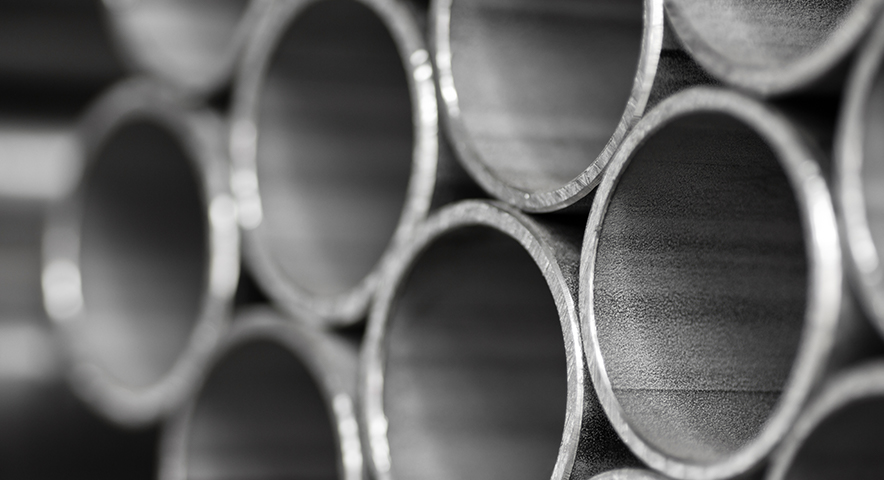
The steel pipes play a vital role in transmitting oils, gases, and water in various industries. These are cylindrical tubes made from raw steel materials undergoing various transformation processes. Have you heard of seamless and welded pipes? Pipe welding or welded pipes is where the two pipes are joined by using the welding techniques. The seamless pipes are single hollow pipes in the middle and do not have visible welded marks or lines, unlike welded pipes. However, it becomes a debate while choosing the welded and seamless pipes. Many steel dealers in Chennai suggest selecting the pipes depending on the purpose and requirements of the project. The differences between seamless and welded steel pipes are based on production methods, cost, resistance, and related factors. Hence, in this post, let us briefly see different techniques that vary them.

Production method:

The foremost difference between the seamless and welded pipes is the production method. The seamless pipes get that smooth finish by undergoing an extrusion process. The raw casted steel billets are placed inside the heating chamber at a high temperature, offering a sufficiently strong force with the piercing machine to create a hollow. However, various casting methods are employed to produce seamline pipes with perfect smooth consistency outside. 

In the welded pipes or Electronic Resistance Welding method (ERW), the steel sheets are rolled continuously till the cylindrical shape is achieved. However, an electric current is passed at the end of the pipes, which melts and combines them. The ERW method is used for welding MS chequered plate, sheets, and strips for commercial and industrial purposes.

Hardness:

Another significant difference between the seamless and welded pipes is the strength or hardness. Pipes are used majorly for transmitting fluids and gases. In the case of fluid transmission like water, the pipes should be able to handle the pressure of the water. If the tube is used for units like air conditioning, it should be prone to different temperatures. 

The welded are less prone to varying temperature and high pressure. The welded lines on the pipes can detach the pipes from one another under varying environmental conditions. Due to the absence of welded seams in the seamless pipes, the pressure is evenly distributed even at different temperatures, making them ideal for transmission. 

Rust-resistance:

Thirdly, manufacturers can provide rust or corrosion resistance to the metals through the galvanization process. The metal, for example, a SAIL TMT bar, must be hot-dipped in a bath filled with molten zinc. So, after removing them from the bath, the zinc reacts with the metal and forms a layer that is resistant to corrosion. 

The galvanization for the welded pipes does not stay longer due to chemical and environmental factors. The welded joints react with the zinc and lead to deposits that can eventually lower the quality of the material. In the case of seamless pipes, the zinc coating adheres well with the surface of the metal due to the lack of welded joints and extrusion process.

Hence, these significant differences differentiate welded and seamless pipes. However, choosing the appropriate pipe depends entirely on the project’s purpose. Bharat steel is the best JSW steel dealers in Chennai and provides quality steel pipes used extensively for all transmission purposes.

Steel Dealers, Steel Pipes, Steel Tubes Seamless And Welded Steel Pipes, Seamless Steel Pipes, steel, Steel Dealers, Steel pipe, Steel Pipes, Steel Suppliers, Welded Steel Pipes

Recent Posts

  • How Steel Distribution Networks in Chennai Manage Grade, Length, and Weight Specifications 
  • How Execution Systems Fail When Steel Supply and Site Planning Are Misaligned
  • How Chequered Plates Behave Under Real Working Load in Industrial Environments 
  • Avoiding Supply Delays: How Steel Distributors in Chennai Impact Project Timelines 
  • How MS Beams Over-Specification Creates Hidden Cost Pressure Without Improving Safety Margins

Idealist by NewMediaThemes